

Overview
The proliferation of machine identities necessitates enhanced identity governance framework. It would be fair to say that our digital ecosystem is ever-evolving. Technology advancements, IT innovations and automation have paved the way for increasing use of machine identities (non-human identities) for day-to-day operations.
Indeed, machine identities outpaces human identities due to emerging use-cases. Consider this: Digital organizations increasingly adopt Secrets Management, Robotics, IoTs among other practices.
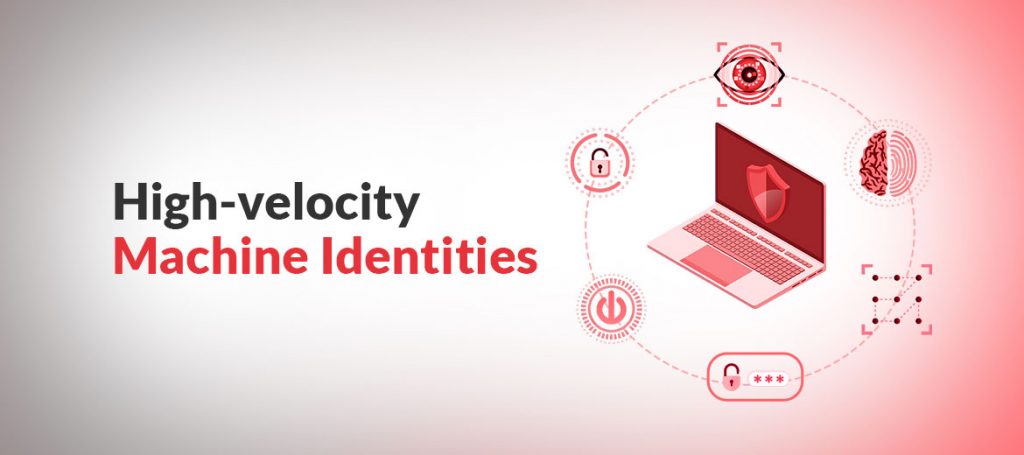
Machine identity-based environments invariably are fast-paced. Resultantly, it leads to the creation of a large number of machine identities in a short span of time. Therefore, we say high-velocity machine identities.
However, machine identities need to be governed and controlled both from a security and compliance perspective. Just like the end-user identities that interact with endpoints, IT infrastructure and applications, the machine identities grant access to dynamic environments.
A blip in the machine identity access control environment could prove fatal to the digital transformation journey.
Therefore, all the critical access control components applicable to safeguard digital human identities are equally important for non-human identities. Authentication as well as managing the life-cycle of machine identities forms the basis of a robust machine identity governance framework.