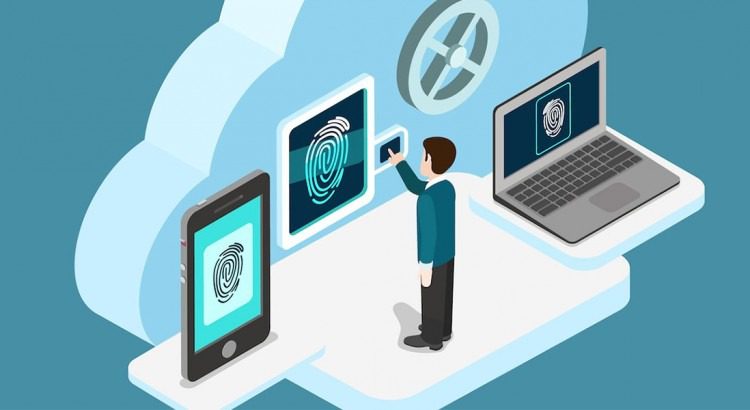

Talk to us Risks to Watch

Knowledge-driven World Spurs Innovation but also Brings Risk

We live now in a knowledge-driven world where advanced technologies like ‘big data’ analytics spur innovation and boost efficiency. Thanks to it, companies are now able to collect and analyze a large set of data, allowing them to study the industry’s trends and patterns, in a real-time.

Increasing digitization of businesses, however, has also given rise to cybercrimes. Every year, businesses witness cybercrime related losses that run into billions of dollars. Our information systems today are constantly under risks. Ransomware, hacking from rogue elements, and denial-of-service assaults are very rampant.

But do you know organizations today are more at risks from within than outside? Data breaches, identity thefts, and internal frauds continue to haunt companies as the general attitude remains lackadaisical towards maintaining a proper Identity and Access Control management solution in place.

Numbers provided by the Breach level Index shows that 1,673 data-breach incidents got reported in 2015, resulting in more than 707 million records being breached. While accidental and external malefactors accounted for more than 2/3 of data-theft cases, thefts from insiders rose sharply, making it as the third biggest source at 14% behind leakages of the confidential data.

You see, sensitive information has now become a hot new ‘commodity’. Malicious insiders– disgruntled or compromised– play a key role in compromising key IT assets as they stand to gain financially. Moreover, cybercriminals now plant their moles in financial institutions, who in turn, try to steal critical data or conduct fraudulent financial transactions.

Recently, our business development manager visited an IT security summit in Africa; and he got startled to find out the number of ‘White-Collar’ crimes in the continent. Close interactions with several CIOs, CISOs of various financial institutions underlined that internal frauds inflict heavy damages every year. In most cases, workforce and IT staff colludes to drain funds. Compromised insiders remove logs after swindling money. Moreover, irregular reporting of loans, misappropriation of assets, and fraudulent loans, also make banks in Africa extremely vulnerable.

In this backdrop, it is vital that we take a closer look at how our IT infrastructure is being managed. Deploying Secure Configuration Management solution in your IT infrastructure, which helps assessing and analysing risks in your internal periphery by doing a real- time check on historical logs can provide a foolproof security. Likewise, having Privileged Access Management solution in place can help cut risks like identity thefts and unauthorized accesses to privileged accounts.

ARCON provides state-of-the-art technology aimed at mitigating information systems related risks. The company’s Privileged Identity Management / Privileged Access Management solution enables blocking unauthorized access to ‘privileged identities’, while its Secured Configuration Management solution helps to comply with Governance, Risks, and Compliance (GRC) requirements .

Need a solution for safeguarding critical IT assets? Please contact us
Disruptive Technologies Have Changed the World but Also Increased Risks

Disruptive technologies such as Internet of Things (IOTs) and cloud computing have created enormous opportunities for global organizations. They have changed the way global corporations conduct business. According to the Australian government, disruptive technologies could generate up to $625 billion through economic activities every year by 2030 in the Asia-Pacific (APAC) region alone.

While disruptive technologies create new opportunities they also make IT assets vulnerable. Indeed, with tons of data stored in cloud, organizations risk data breach from malicious outsiders.

Massive data breach incident involving the professional networking giant, LinkedIn is a good example, where hackers took advantage of security gaps of the company by attacking servers deployed on cloud. According to lawsuits, hackers were able to steal LinkedIn users’ personal information by using “botnet”, a highly coordinated computerized network. Hackers manipulated six of the company’s IT security systems deployed for preventing breach of personal data. However, malefactors also took advantage of the data stored in cloud, lawsuits showed. A cloud-service company contracted by LinkedIn to deploy personal data of users got attacked as the user interaction with LinkedIn existed in a less secured environment, allowing cyber-frauds to send requests to LinkedIn servers to pilfer the data.

Technological innovation ushered by IOTs promises amazing possibilities that could make our day-to-day lives more exciting, and efficient. But the technology also comes with risks. As IOTs store plenty of personal information, vulnerability to cyberattacks such as denial-of-service (DOS) kind of assaults remains a big concern. A Washington-based family recently went through a horrible experience. A baby monitor got hacked by a stranger, who sent petrifying messages to a kid, also heard by her mother.

Likewise, your company’s highly classified information is always under threat from identity thefts. Data breach could bring an organization to a standstill and lead to billions of dollars in losses. As highly classified information becomes a key asset in the age of “Big Data” analytics, threats always lurk from malicious insiders, and cyber-frauds. Organizations’ success, in this backdrop, will not just depend upon collecting sizable amount of crucial database but also safeguarding it.

ARCON provides state-of-the-art technology aimed at mitigating information systems related risks thereby enabling organizations to comply with Governance, Risk Management and Compliance (GRC) requirements. The company, in particular, is known for its unique Privileged Identity Management / Privileged Access Management solution, which helps deter the misuse of ‘privileged identities’.

Learn more about us at www.arconnet.com

Management at the Top Companies Least Prepared for a New Type of Risk

The only thing predictable in any business is unforeseen risk. Risks come in many types. Manufacturing companies stay exposed to supply chain risks, while financial institutions are vulnerable to regulatory changes and wide gyrations in markets. Besides, risks emanating from social and political upheavals, terror attacks, and natural disasters also keep managements on tenterhooks.

That’s why, one of the key roles of top management is to foresee risk and asses how it will impact their organization. The idea is to create a robust organization that can withstand external shocks.

From an economic slowdown in China to political risks, management at multinational companies are apt at managing all kinds of risks.

However, organizations in the 21st century face another major risk, cyber threat. Given the recent high profile cases of data breach at some of the biggest companies in the world, top management are least prepared for this new type of risk.

Indeed, insurance firm Allianz even noted this. In a recent research, it said that cyber risk was the most likely risk for which managements remain least prepared.

Today, the nature of cyber-attacks are highly advanced. Cyber-assaults are no more confined to defacing websites and denial-of-services (DOS) attacks.

Instead, they are more technologically sophisticated and ‘commercially’ motivated. As a result, we are witnessing more and more data- breach incidents, corporate espionage, cyber heist cases and theft of intellectual property.

And as the Edward Snowden episode shows, organizations are more at risk from within than outside. This is because ‘trusted insiders’ are privy to vital information. They have access to privileged accounts— accounts authorized to use data base servers, email servers, and other critical IT asset servers. So if, ‘trusted insider/s’ turn malicious against an organization, it can wreak havoc. The fact that cyber-crime from insiders typically gets detected after a long time make them doubly dangerous. Moreover, sensitive data has become a hot commodity. It incentivizes compromised employees to take advantage of their positions.

In this backdrop, a fire-walled IT system today is inadequate to safeguard against growing cybercrime. Managements would do well if they could cut risks by adopting IT risk solution like Privileged Access Management (PAM) also known as Privileged Identity Management (PIM), which provides constant monitoring, auditing, and recording of all privileged sessions.

ARCON provides state-of-the-art technology aimed at mitigating information systems related risks thereby enabling organizations to comply with Governance, Risk Management and Compliance (GRC) requirements. The company, in particular, is known for its unique Privileged Identity Management/Privileged Access Management solution, which helps deter the misuse of ‘privileged identities’.

Learn more about us at www.arconnet.com