Talk to us Risks to Watch

Change of IT Security Trends in a Post-Pandemic Era

It’s no secret that the enormous changes that organizations were forced to make in the IT processes last year have come with increased cyber security threats. As we switch to a “new normal,” the terrain remains uncertain. Organizations must stay on top of the changing threat landscape, as various cyber security trends are developing from the post-pandemic age. In this blog, we have discussed such general trends from an IT security perspective.

  • Emerging operating models

Some businesses will have to switch to new operating models. Cybersecurity and IT rights would require cautious assessment and careful handling for these organizations in any incident’s immediate aftermath. 

Monitoring and support for remote workers will become critical. Before permitting the relocated system to reconnect to the network, cybersecurity specialists must adopt a  system and access scrutiny for personnel who move from home to the workplace.

  • Security at the edge

Recognizing the impact of working from home is the next stage in repositioning security in an organization. Almost all workforces became remote during the pandemic’s peak, and even when enterprises progressively return to offices, there will still be a large network of remote workers.

Without VPN architectures, this rapid and massive shift to remote working at the initiation of lockdown constraints would not have been possible. However, the safety governing VPNs is not as powerful as it needs to be for the heavy reliance on these systems to link employees to critical applications within organizations. As a result, businesses have shifted to Privileged Access Management (PAM) to support global remote access, including SD-WAN. These systems now have integrated security measures, providing remote workers with nearly the same level of protection as the head office. 

Secure Access Service Edge (SASE) solutions are a more secure alternative to VPNs that are projected to become more prominent in the future. These services combine network and network security into a single cloud service that is both secure and capable of providing the amount of connectivity required by edge devices.

  • Emergence of micro-segmentation

Segmentation and micro-segmentation are anticipated to control digital identities and implement zero-trust network security. Increased investment in vendor roadmap related to zero trust investments will allow for more effective interventions to secure networks. 

  • Deploying advanced technology

Advanced capabilities backed by next-generation technologies such as big data, artificial intelligence, and machine learning must be included in threat detection and response capabilities. These are required to recognize & respond to end-user anomalies on machines without human intervention on a real-time basis. 

A new paradigm of cyber security has dawned due to the pandemic. IT security professionals who push the game and defend their organizations’ people, technology & data against new or increased threats from more skilled cyber-criminals will be critical to ensure business continuity. 

Conclusion

Cyber security teams have surmounted the initial obstacles during the crisis, there is an opportunity to learn from the pandemic to strengthen cyber security posture in the long run. The pandemic has posed a significant challenge for businesses worldwide; IT security experts who step up their game against the increased threats posed by skilled cyber-criminals are critical for the future.

National Startup Day: The IT Security Side of the Initiative

Overview

Earlier this year, the Government of India announced 16th January, 2022 as “National Startup Day”. Perceived as the backbone of India, the startup ecosystem is envisioned to foster innovation, and strengthen the digital infrastructure along with an overall growth of the nation. 

This is an exciting time for startups and an excellent initiative as well. However, as an Information Security proponent, we would like to bring the area of Information Security at the forefront of this initiative. As modern startups build businesses on the foundation of digital technologies, robust infrastructure is essential to thwart looming IT threats.


Information Security goes hand in hand with startup initiatives

In a typical startup, IT security measures and concerns generally take a back seat. With so many parameters such as registrations, legal permissions, investment, suppliers, logistics, pricing among other areas dominating the list of priorities, Information Security policies typically take a backseat. This happens due to the prevailing misconception that Information Security is a problem for large organizations with a large and distributed environment. 

There are numerous inherent risks associated with the IT security loopholes of the startups. 

  • Startups are targeted directly by the malefactors to penetrate bigger targets via mutually shared and accessible databases
  • To ensure operational efficiency from the beginning, start-ups deploy advanced technologies without considering adequate IT security measures
  • There might not be any dedicated IT team in a startup – even if they have, the number of resources might not be sufficient; as a result, cyber incident response is comparatively slower


How to ensure IT security?

India, in the recent past, is witnessing a massive surge in adopting advanced and sophisticated technologies, thanks to the “Digital India” drive. However, can we claim this initiative revolutionary unless there is adequate cyber resilience? It is mandatory irrespective of small startups or large organizations.

As the confidential business data is migrated to one or more multiple digital platforms separately, it starts challenging the IT security preparedness of the startup. The organizations need to adapt to the trends from the very beginning of this transition. Extensive dissemination of Information Security awareness among the startups cannot just ensure cyber resilience but also comply with the regulatory standards. Compliance rules are applicable to every organization. Even the smallest startups might have access to a huge customer database that could fall under global/ regional regulatory standards. 

Identity and access control vulnerabilities lead to data breaches. With any stringent IT security policy, a single data breach incident might halt the startup even before it takes off. It could even damage brand value before creation. In this scenario, a robust identity and access management practice is highly imperative to ensure secured IT administration. Related solutions secures every access to data resources in the IT environment. 


Conclusion

India is eyeing to fulfill its dream of becoming a leading startup destination globally. While there is dedicated support from the Government, the IT security policies, once implemented, could ensure reliable and handsome investment from all over the world. In the next couple of years, India is expecting the best contribution in GDP from the startups. To materialize that dream, adoption of robust IT security policies and adequate awareness to follow those policies is a must. Without it, the emerging IT threat patterns might play spoilsport.

Importance of Segregating Privileged Identities

Innovation spurs growth. And to achieve growth, global organizations essentially require to cultivate IT ecosystems that enable them to collate, comprehend and manage an increasing amount of data.

This shift, however, has led to a gradual expansion of the IT infrastructure. There are a greater number of devices, OSes, end-users, software applications, data hosting platforms that exist now in a typical IT set-up.

Subsequently, an IT infrastructure transforms into a multi-layered structure, comprising of many IT elements — both on-cloud and on-premises, resulting in an increased number of privileged identities – holding access keys to highly classified and sensitive data.


So, what does Privileged Mean?

The ability to manage and control critical IT functional areas is called Privileged in IT terminology. A user with administrative capabilities will have complete or near-complete authority over the system.

Resultantly, securing these critical IT assets become increasingly important amid increasing cyber-attacks from compromised insiders and malicious third-parties.

However, organizations have always struggled to establish control over too many identities, especially the privileged identities, a problem that has caused large data breaches. One of the reasons is that a Privileged Identity Management or Privileged Access Management is a complex task without an automated PAM solution.

Complex privilege identity management is often a deterrent for a security team to provide access to multidimensional teams which results in excessive privilege assignments.


So, what exactly means “too much privileges” or “over-privileged identity”?

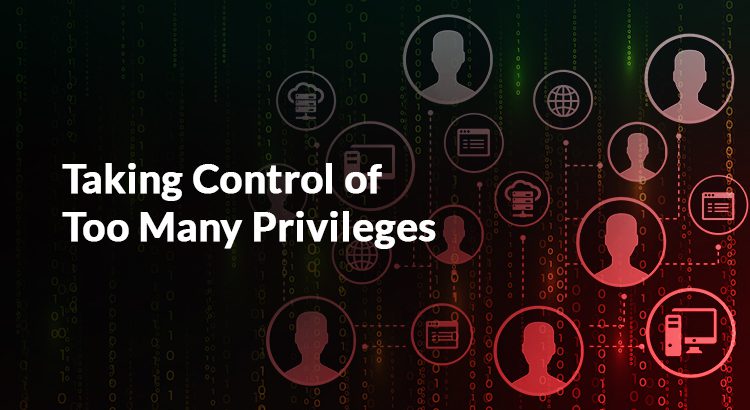
These are identities that have far more privileges than are required to carry out the tasks that have been given to them. An obvious example of an over-privileged identity is a user login account that only needs access to the local file system but contains PC or network admin permissions. Excessive Privileges can include the capacity to successfully modify or even eliminate crucial portions of the infrastructure itself. 

Likewise, a cloud-based user that has been given unnecessary privileges can have very dangerous IT consequences.


But what makes managing privileged identities so challenging?

A combination of cumulative “privilege tasks” for individual privileged accounts, increase in the number of privileged identities, and lack of appropriate record-keeping (segregation of privileged users based on roles and responsibilities) typically results in too many privileges. erotic massage body rub nyc near me


Risks arising from excessive privileged entitlements?

  • No control over shared user access across enterprise
  • Excessive privilege assignment for least critical activities
  • No control over activities of third-party staff


Segregating & Securing Privileged Identities

Maintaining all assets in a single pool for a large organization might be risky. The Privileged users & processes must be segregated based on trust, role, and permission sets to enforce role and rule-based access to systems. 

A PAM solution aids in the creation of flexible privilege policies that allow security controls to be implemented based on privileged users’ roles and responsibilities. Segregating privileged entitlements also prevents breaches from spreading as privileged users are granularly controlled.


How Segregating Identities helps to strengthen security

As end-users access systems, the logged data enables the IT staff to understand the IT resources’ usage/access patterns. This in turn helps them to map an outline of various access requirements, and subsequently, once the entitlements are segregated, access policies can be formulated based on “need-to-now” and “need-to-do” principle.


Conclusion

Essentially, to prevent credentials abuse and data breach, organizations must do a comprehensive mapping of their IT environment. It helps to understand the daily use-cases that require to access critical IT resources. Once privileged entitlements are segregated, the IT security staff can enforce granular level access controls. It improves the security posture and helps to comply with the IT standards and regulations as well.

Security, Compliance & Productivity

Many factors have contributed to the rising level of cybersecurity threats such as identity abuse, credentials thefts, and data breach that organizations face every day. Multi-cloud environments, heterogeneous technologies, increasing number of end-users and ever-expanding IT networks along with a worldwide pandemic that has altered IT processes have all added to the complexities. 

The traditional perimeter security isn’t as effective in today’s distributed data center contexts. The concept of a data center boundary has vanished, necessitating the controlled management of human and machine identities from any location and in any hosting model. 

Explanation

In today’s hybrid data hosting models, businesses and organizations generate more and more data. The IT security staff not just have to secure cloud resources and legacy applications but also a host of other IT assets. Management of Machine Identities, enforcing access control around APIs, ensuring role-based access to command-line interfaces (CLIs) are some of the other daily use-cases. 

Secondly, there are hundreds of end-users, third-party users, partners and suppliers who continuously require access to the critical systems to perform daily tasks. It is the responsibility of the IT security team to ensure that enterprise data is accessible only to the authorized end- user; notwithstanding the location or hosting models (on-premises and on-cloud environments)

Businesses and organizations under these changing circumstances are facing more challenges. Against the backdrop of a large number of dispersed identities that require day-to-day access to systems, the practice of identity and access management (IAM/IDAM) ensures controlled and restricted access to the IT environment where each identity is administered and governed.

IAM ensures Compliance

Almost every organization has to follow regulations as to data privacy, data integrity and data security. Complying with regulatory mandates becomes very easy as the IT security staff can move forward swiftly and build a security baseline with Identity & Access Management (IAM/IDAM) solution. Businesses and organizations can have effective policies that protect end-user accounts, conduct regular audits and revoke rights of an identity if any anomalous activity is found. 

An IAM solution enables an organization to take control of the management and monitoring of all the identities to comply with the access control requirements consistent with regulatory standards. Identity and Access Management is critical for organizations seeking to strengthen their compliance standards.

IAM enhances Productivity

The IT staff and end-users all like to enhance their productivity, and a good IAM solution can accelerate the digital transformation by enhancing IT productivity. 

IT administrators find it very complex to administer and govern digital identities when the number of end-users in an IT environment increases gradually. It not only has an impact on the IT administrative experience but also increases the risk of identity abuse/misuse.

By deploying an IAM solution, the IT security staff can address the problem statements by automating the end-users’ identity lifecycle management. The solution ensures Identity Lifecycle Management through provisioning and de-provisioning of end-users, offering an intuitive workflow matrix, and providing role and rule-based access to systems among other access control capabilities. 

Conclusion

ARCON | IDAM is the best-in-class solution that addresses enterprise access control use-cases in vast and distributed IT environments. It ensures secure access at granular levels to all elements of IT infrastructure. As a result, IT processes remain uninterrupted, which boosts productivity. It ensures business continuity.

Cyber Threats in the Media & Entertainment Industry

Overview

When an organization suffers a data breach or other anomalous incident, how does the news reach the world? We all know that the media and entertainment industry plays the key role here. But what happens if the media organization itself is affected? It’s time to understand cyber security concerns and challenges in this industry as well. 


The IT Security Paradigm

The Media & Entertainment industry nurtures a preconceived notion that this industry bears less risk of cyber threats. This lackadaisical attitude gives ample scope for cyber criminals to explore the vulnerabilities and breach data. A couple of years back, the ‘fame’ and ‘popularity’ of a global producer of movies and web series turned ‘ill-famed’ after their streaming service went live without the knowledge of the organization. The hackers actually compromised the site’s users by stealing their user credentials, changed all their passwords and logged off from all the devices to take control of the activities and huge amounts of data. 

Just before the pandemic hit the globe, this incident turned out to be an eye-opener for the global cyber security community. However, after multiple levels of scrutiny, the truth got revealed that entertainment companies have their own set of security challenges that were ‘ignored’. The hackers group found it luring and took the best advantage out of it by launching data breaches, creating data cloning, compromising user accounts, using impersonations and more.


The IT Risks

The entertainment industry has come a long way from electronic modes to digital modes where production houses migrate their broadcasting services towards online content and streaming services. As a result, the risk of hacking, data theft and potential damage of reputation increases daily. Here are some predominant IT security threats that can damage the organization beyond recovery.

Insider Threats: Insiders with easy and regular access to the ‘not-yet-released’ content bear the risk of leaking information to file-sharing servers. Most of the time, media companies lack any seamless user monitoring mechanism that increases the risks. When trusted’ insiders remain involved in the malicious act, it invariably takes long to detect the malpractice or rather the source of it.

Cyber Sabotage: Group of hacktivists or organized cyber criminal groups attack media organizations to steal data, malign reputation and manipulate information of terrorism, religious fundamentalism, political idealism or simply spread baseless rumours. Organizations face real pain to deal with the consequences of such incidents.

Inadequate Public Scrutiny: Hundreds of public emails are inboxed in organizations’ official email everyday. It could be service feedback, service requests, complaints and more. In case of running contests, organizations check responses in the emails to decide the winners. Phishing threats loom large here. A potentially harmful email in disguise of an appreciation email could be disastrous if opened and clicked.

State-sponsored Threats: In order to stop spreading of controversial entertaining content, government-authorized ethical hacktivists compromise every access point. On several occasions, the media organizations face legal consequences as well in this regard and face financial and reputational setbacks.

Non-Compliance: The rules and regulations of global compliance standards are applicable to every industry including media and entertainment. Hence, in case of any data breach incident, the organization could surely be charged with non-compliance penalties. It raises financial stress and has adverse effects on the business future. 


Security Measures

Cyber security in the entertainment industry is crucial because a vast number of users are habituated today with online services. Hence, a robust IT security is the only key to stay above from the predominant cyber threats.

  • A seamless monitoring of the end-users accounts round the clock can help the organizations to keep a track of who is accessing critical information at what time and for what purpose.
  • Proper prioritization and segregation of data assets is highly critical. Along with that, determining the access control mechanism of every database as per rule and role can minimize the risk of unauthorized access.
  • A robust mechanism to authorize and authenticate the user before allowing access is mandatory to ensure secure access.
  • All the privileged set of identities that are gateways to most confidential information such as action plan for streaming services, upcoming productions etc. should have ‘Just-In-Time’ privilege policy to ensure privileged access only when it is required and not round the clock. It strengthens access control policy and protects confidential data.
  • Following the global compliance mandates by following the best IT security practices can keep the organizations away from cyber threats.


Conclusion

As the media and entertainment sector grows to their digital potential and expands their online presence, it is highly recommended to protect their members, customers, partners and other associates and governing bodies. Today, it is one of the most profitable industries across the world provided it has the best IT security practices. Hence, organizations should invest time and money to strengthen cybersecurity and mitigate emerging IT risks.

Data Breach: The Other Side of the Coin

Overview

Data breach incidents continue to dominate cybersecurity headlines around the globe. Despite immense emphasis on cybersecurity, data security vulnerabilities are increasing. Data breaches are happening rampantly; and businesses are too slow to react. One explanation is that cybercriminals are changing their ways to circumvent defenses to obtain unauthorized access to confidential business information. 

According to CNBC, 93% of successful data breach incidents happen in less than a minute; among which 80% victims take as long as a week to detect the breach. Another research suggests data breach incidents are increasing 33.3% on an average annually. This is indeed worrisome!


Consequences

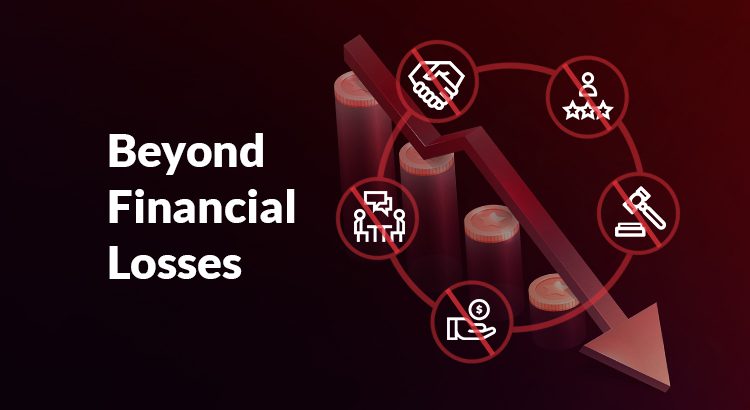
The consequences of data breaches are very serious; and too many that harm business continuity in many ways. These consequences are something beyond just data loss and financial loss.


Beyond Financial Loss

Significant revenue loss is the most evident consequence of any data breach incident. This is undoubtedly the most immediate and hard-hitting repercussion that organizations are forced to deal with. In this blog we will discuss some apparently long-term consequences that organizations face after a cyber incident.

  • Legal Battles, Non-Compliance and Penalties: An organization that deals with sensitive business or personal information is legally required to secure it round the clock. Based on geographic location and industry, every organization has to comply with regional data security mandates or Central Bank guidelines. If there is any non-compliance with IT regulations, organizations that suffer a data breach might have to pay hefty penalties. Even if the organizations notify the clients about the incident on time, they face legal battles from different stakeholders. It becomes difficult to pacify them even if they promise a cyber forensics investigation of the incident.
  • Damage of Brand Reputation: News of data breach incidents travel faster than wind, and the victim can become a global news story within a matter of hours after the news is disclosed. The stakeholders immediately verify the news, and they start spreading the news from their end as well. In no time, the organization takes a hit on its brand reputation, while declining consumer trust is another cause of concern. On several occasions, the victim loses its share value in the stock market significantly. It causes irreparable and long-term damage to the organization. 
  • Loss of Clients and Prospects: Existing clients of any data breach victim fear adverse effect on their business continuity. The unreliability factor starts knocking at the back of the mind while decisions to discontinue partnership linger large. They fear that their data is not in the right hands. New prospects also prefer to take the same path, and many bright business possibilities are killed before germination.
  • Non-Acceptance, Resistance and Confusion among IT Staff: Post a data breach incident, an organization tends to make several IT overhauls. The data breach victim changes its IT security policy, brings changes in the hierarchy of the IT department, and roles and responsibilities of the IT end-users are also changed. Moreover, there are implementations of new processes and technologies to strengthen the data security and data integrity in the IT infrastructure. Typically, in such situations involving IT overhaul, there is human resistance to accept and understand new technologies and also to take up new responsibilities. It disrupts the overall IT process.
  • Higher cost to run a business (Insurance premiums): Cyber Insurance premiums increase in case of data breach incidents. This premium is inversely proportional to cybersecurity preparedness of the organizations. These organizations majorly opt for cyber insurance as it covers cyber risks with a highly competitive monetary margin. However, it is to be noted that if there are any loopholes in the IT infrastructure or any history of data breach incident, the cyber insurance premiums get higher. 


Conclusion

Not all losses involve finances. All the consequences mentioned above are ‘heavily-priced’ as well. So what to do to avoid such obnoxious situations? The answer is adequate IT security policies and relevant cybersecurity mechanisms with regular audit trails. It not just ensures prevention of cyber threats but also maintains business continuity. The organizations can also avoid the knotty aftermath of a data breach.

Role of Privileged Access Management in Protecting Data

Many IT elements jeopardize the privileged access security of your enterprise operations; however, by deploying robust PAM solutions, you may fortify your network while easing access for privileged users. Learn how!

In a world where privileged credentials are stolen in an estimated 74% of security breaches, deploying a Privileged Access Management (PAM) solution is one of the most important steps businesses can take to secure their IT assets.

Privileged accounts grant unique account privileges to certain end-users with elevated rights to execute key business operations such as accessing private company information, resetting user passwords, and implementing changes to IT infrastructure systems. However, if these accounts are compromised, the organization may face major consequences.

Organizations can use a strong PAM solution to ensure that individuals who require privileged access receive it while protecting vital business systems from devastating assaults. But before all, what is a PAM solution?


Privileged Access and PAM

 In a corporate environment, “privileged access” refers to special rights or ‘entitlements’ that go above and beyond a typical user. Privileged access enables enterprises to secure their network and apps, conduct their businesses efficiently, and protect sensitive data and key infrastructure.

Privileged access can be assigned to human and non-human users, such as applications and machine identities. Privileged accounts, credentials, and secrets abound: it is claimed that they outnumber employees three to four times over.

 The privilege-related security risk in current business environments is rapidly expanding as systems, apps, machine-to-machine accounts, cloud, hybrid environments, DevOps, robotic process automation, and IoT devices become increasingly interconnected.

Today, nearly all advanced assaults rely on privileged credentials to access a target’s most sensitive data, services, and infrastructure. Privilege access has the potential to disrupt a company if it is misused.

Endpoint compromise and privileged credentials are virtually usually the cause of data leaks. As a result, monitoring and protecting privileged accounts has become critical. Endpoint least privilege security is crucial, as local administrator rights are a prime target for cyber thieves.

Solutions that safeguard both endpoints and privileged credentials must be in place to protect sensitive data. That’s when PAM comes to the rescue. Privileged access management (PAM) is used by organizations to protect against the hazards posed by credential theft and privilege access abuse.

PAM is a comprehensive cybersecurity strategy that includes people, procedures, and technology to govern, monitor, secure, and audit all human and non-human privileged identities and actions in an organizational IT environment.


How does PAM protect your real-time data?

 Unmanaged and unmonitored accounts expose your organization to a slew of privileged dangers, whether by design or accident. Humans are considered as the weak link in the cybersecurity chain, whether they are internal privileged users exploiting their degree of access or foreign cyber attackers aiming and hijacking privileges from users to operate discreetly as “privileged insiders.”

Privileged access management assists organizations in ensuring that employees only have the access they need to execute their tasks. PAM also enables security teams to detect harmful actions associated with privilege abuse and quickly mitigate risk.


# PAM is critical for achieving compliance

 The capacity to observe and detect suspicious occurrences in an environment is critical; yet, without a clear emphasis on what poses the most risk – unmanaged, unmonitored, and unsecured privileged access – the organization will remain exposed.

Incorporating PAM as agile security and risk management strategy helps firms capture and track all key IT infrastructure and sensitive data, simplifying audit and compliance obligations.


# PAM restrains credential sharing

 Numerous people inside the organization share many administrator accounts, and for convenience, they frequently use the same password across multiple systems.

These techniques can make determining which actions were performed by specific personnel hard, raising a company’s security risk and exposing a lack of compliance with regulatory obligations.

PAM can assist organizations in mitigating these risks by requiring each individual to utilize a unique login. PAM solutions may additionally demand strong passwords, which must be changed regularly depending on the account’s level of sensitivity.

Administrators can also use PAM to deploy single sign-on (SSO) authentication to hide credentials from users and ensure effectiveness each time they access critical assets.


# Review risky behavior notifications in real-time

 Many PAM solutions provide administrators with real-time email and text warnings that alert them to potentially dangerous or suspicious behavior.

They can create alert settings to receive messages whenever a privileged user accesses certain data or systems, when potential policy breaches occur, or when hazards such as too many allocated privileges to specific accounts are highlighted. Administrators can swiftly make modifications to maintain a high degree of security by analyzing notifications in real-time.


#  Integrate with access management systems

 In recent times, Leading PAM systems can integrate with an organization’s larger identity and access management (IAM) system, closing security gaps and eliminating repetitive processes for privileged and non-privileged accounts.

Companies that combine the capability of PAM with identity governance can benefit from automated provisioning and de-provisioning and speedier reporting and auditing throughout their user accounts. As a result, you can save time & the complexity of securing all user identities is reduced.


# ‍PAM secures cloud-forward and hybrid remote access

 Distributed, and even completely remote, workforces are becoming the standard, implying more Software as a Service (SaaS) applications, infrastructure automation tools, and service accounts connecting from different locations.

Companies need something more precise than a VPN to secure cloud access & hybrid environments as these privileged accounts outnumber humans in an organization, where PAM emerges as the solution.

Managing privileged access is a critical component of an organization’s overall identity governance strategy. With a solid PAM solution, businesses can be confident that they are granting privileged access to those who require it while safeguarding their systems from destructive attacks that could collapse the business.


Final Thoughts:

ARCON | PAM is designed to handle expanding use case issues of privileged access by providing IT security with granular controls and implementing least privilege principles in enterprises.

ARCON, a firm trusted by over 1000 worldwide companies, provides solutions to emerging use-cases that ensure business scalability and compliance. So, if you want to invest in PAM solutions, consult an expert to choose the best possible security goal!