Talk to us Risks to Watch

The Top 3 Reasons for Adopting Endpoint Privilege Management

Overview

Information security vulnerabilities have increased drastically due to alterations in work culture (organizations switching to hybrid setups) and the rapid digitalization of business processes—both for IT operations and IT administration. However, to allocate critical IT tasks and fasten day-to-day IT tasks, the number of end-users is growing exponentially. Endpoint privilege management, in this regard, remains a largely unattended area. Unmonitored and ungoverned endpoints invariably lead to misuse of endpoints, resulting in data breaches and data exfiltration.

In this blog, ARCON has identified the top three reasons why organizations must implement an endpoint privilege management (EPM) practice.

# Reason 1 – End-users having too much of privileged access

There are multiple users accessing multiple devices and applications every day for multiple IT tasks. Gone are the days when IT administrators used to count on reputed anti-virus software or firewalls to protect endpoints. 

Today, IT threat patterns have changed, and if there are no time-based, role-based, or rule-based access mechanisms, business data privacy could be compromised. Moreover, excessive standing privileges intensify the risk because the “who is accessing what and when” question lingers large. As a result, the risks stemming from ‘always on’ privileges intensify. 

So, how to control the over-privilege rights and monitor the end-user activities on a real-time basis?

Through the ARCON EPM platform, the IT administrators can not only onboard and profile the user identities and provision those identities for certain tasks (based on end user roles and responsibilities), but also quickly decide whether to provide access on a just-in-time (JIT) basis or reject it based on end user profiles. 

Thus, application abuse, data misuse, and insider threats can be significantly reduced by EPM, which in turn helps to reinforce the overall access management framework. It also helps to implement the principle of ‘least privilege’. 

#Reason 2 – Absence of privileged elevation on-demand

While performing multiple tasks in any IT environment, any end-user might be required to obtain privileged access rights to perform privileged or elevated IT tasks faster and more conveniently. If any onboarded user on the network requests access to critical applications, the IT administrator grants access to the system or applications.

But are the privileged rights revoked once the task gets over? Data breach threats increase in the absence of privilege elevation on-demand. In other words, if privileged access rights are not revoked, it can lead to excessive privileged entitlements, which is against the principle of least privilege.

ARCON | EPM enforces Just-In-Time (JIT) endpoint privileges that revoke 24*7 ‘always on’ elevated privilege rights immediately after the task is completed. This ensures the implementation of the Least Privilege principle and thereby minimizes the risks arising from “always on” standing privileges.

#Reason 3 – Poor endpoint governance

Today, one-third of global IT incidents happen due to poor endpoint governance. As the number of end-user profiles proliferates, organizations fail to implement robust endpoint management practices that can reduce the chances of a data breach, malware attacks, and application misuse. Typically, there are five reasons behind poor endpoint governance.

  • Absence of comprehensive mapping of the IT environment
  • Absence of data governance (Lack of data contextualization)
  • No risk-based profiling of end users  
  • Absence of reporting mechanisms 
  • Application Blacklisting 

ARCON | EPM addresses all the above, and with the help of this solution, organizations can automatically create endpoint privilege policies by adequate profiling of all the on-boarded end-users’ roles and responsibilities, along with reporting of all privileged activities happening on critical applications. 

The unified policy framework provides users with a rule-and role-based access mechanism along with a strong behavior analytics component to identify end users’ anomalies on a real-time basis.

Additionally, ARCON Data Intellect enables building a strong ring fence around enterprise data. It essentially allows us to classify data, itemize the exposed data, categorize the critical data, and gain an understanding of the “where” and “what” of data.

As a result, robust endpoint governance is established in the entire IT ecosystem.

Furthermore, the File Integrity Monitoring (FIM) component of the solution provides the capability to track unauthorized file changes on user devices in real time. FIM also keeps track of file history and can undo changes as needed. And finally, the application blacklisting capability helps to address malware threats.

Conclusion

Prioritizing endpoint security is also crucial from an enterprise IT security perspective. Endpoint security is highly essential to meet compliance standards as well. Once the business-critical applications are accessed in a controlled environment with the help of an EPM solution, the organization’s overall compliance framework automatically remains audit-ready and data breach threats can be significantly mitigated. 
Remote Access Security: A Must-have Component in Enterprise Access Management

Recent trend

Quite recently, large IT giants have been requesting their employees to come back to offices and re-establish the pre-pandemic culture of “work from the office”. There are two major reasons behind this initiative.

  • Re-build the habit of better and more transparent coordination and communication between peers and colleagues to handle critical assignments faster
  • Prevent the ongoing trend of moonlighting among white-collar professionals—in fact, organizations are apprehensive about the chances of the working hours being exploited by their employees

Having said this, most employees are still allowed to work remotely for 2-3 days and the rest of the time from office premises. As a result, the “Work-From-Anywhere” (WFA) concept has evolved, it is universal, and it is likely to be the new norm going forward.

However, in this evolving scenario, what about the IT security aspect, especially in the access management domain? The IT environment includes both on-prem and remote conditions. Even if organizations are well-equipped with secure access control mechanisms and well-defined IT security policies in on-premises environments, what about the security aspects of remote work conditions? End-users, especially privileged users, require access to critical systems and applications from home (or anywhere) to ensure uninterrupted IT operations.

Hence, remote access security has become a must-have component in the enterprise access management practice.

What is the Challenge?

For more than a couple of quarters, we have left behind the global pandemic days. Yet, IT security, IT risk, and compliance management teams face the challenge of how to reinforce the security measures for access control in remote work conditions. The primary reason is, as said already, the advent and popularity of the work-from-anywhere culture. While organizations have realized that working remotely is also a way to ensure business continuity, remote access threats, especially privileged-level threats, still linger.

A very common ambiguity in remote work conditions is “to whom to allow privileged access.” That too, for which system, at what time, and for what purpose? As a result, insider threats and unauthorized third-party threats intensify. The most common use cases among them are:

  • Weak or inadequate access control policies cannot ensure that all the accesses happening in the enterprise IT environment are authorized. Malicious actors misuse this loophole and compromise privileged accounts.


  • Absence of robust end-user validation mechanism like Multi-factor authentication fails to identify authorized and genuine users accessing critical systems in the enterprise network. Suspicious and unreliable third-party users remain unidentified because of this.


  • Employees access business-critical applications with ‘always-on’ privileges. There is absence of access control framework such as access based only on ‘need-to-know’ and ‘need-to-do’ basis or granular access controls. 

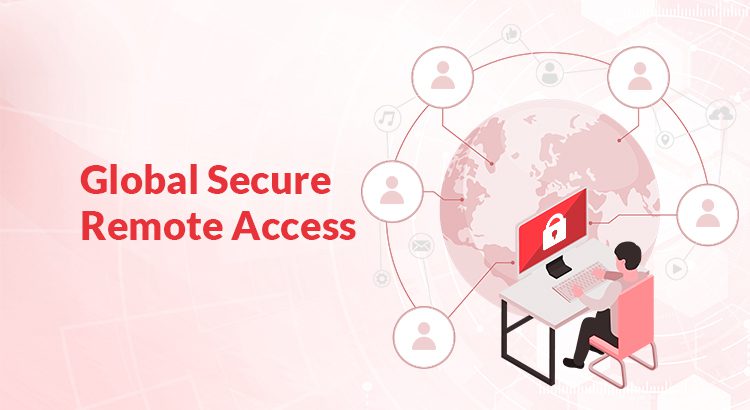
The solution: ARCON Global Secure Remote Access 

ARCON’s Global Remote Access (GRA) solution ensures a secure enterprise IT environment by reducing the unproductive hours of IT operations like time taken to respond to functional glitches raised by end-users while working remotely.

Moreover, while permitting users to have privileged rights by the IT security team, the hours lost during the transition can be eradicated with the automated GRA tool. This privilege elevation happens in a secure manner. It enhances the enterprise IT lifecycle management by managing every possible remote assistance provided to the end-users. Here are the benefits of the GRA solution in WFA conditions.

  • The IT administrators drive a remote session only after an approval and user validation check done by the tool. The admins completely possess the rights to pause or terminate the access rights if any anomaly is suspected. However, the duration of the elevated rights can be extended if required.


  • Any kind of confidential file/ data transfer is always restricted by GRA unless the end-users request for it on valid operational ground and reviewed by the risk management team. It indirectly prevents chances of data loss. Once the process is over, the designated file access rights are revoked immediately to prevent standing privilege.


  • The IT admins can simplify the task of tracking the end-user activities and generate a report of all the remote activities performed on each and every system. It generates video logs of every remote session and thereby helps in regular audit trails and compliance.


  • During situation-based ad hoc requirements, the administrators need not reveal the login credentials to the end-users who are given elevated access rights for any application/ system for a specified time. It helps to follow the principle of least privilege.


  • GRA helps IT admins to remotely enable password rotation policy for the end-users frequently. It ensures least intervention and thereby prevents every unauthorized access.


Conclusion

“Work-From-Anywhere” is going to stay. In order to address the inherent  risks associated with remote work conditions, Global Remote Access (GRA) is an effective and must-have solution for today’s enterprises to manage and control remote users across different geographical locations. 

Why is Identity and Access Management (IDAM) critical for modern IT set-up?

About modern IT set-up

The number of digital identities is proliferating ceaselessly in every IT setup. The influence of hybrid work environments, the advent of cloud computing, and exponential growth in business automation processes have led to a drastic change in IT environments, which now require lots of users with both human and non-human identities to perform different IT tasks. 

Every end-user has an individual identity and obtains access to the organization’s IT resources to perform their administrative and operational tasks. However, how do organizations respond when it comes to monitoring, controlling, and securing those identities? At the end of the day, security is determined by how identities are managed and how their life cycles are governed. After all, unmonitored and uncontrolled identities are the most vulnerable IT components that can be compromised by insiders and third parties. They are the sources of breaches, data exfiltration, and snooping in most cases. 

About Identities

Firstly, let’s talk about an IT misconception over here. The misconception is that privileged identities or identities with elevated rights are more vulnerable to insider and third-party threats. However, it doesn’t require a cyber specialist to bust this myth. A basic non-privileged identity, if compromised, can be devastating for the organization in terms of data loss, financial loss, and reputation loss.

Moreover, errors can happen very often through a non-privileged user or a standard IT user. There are instances when a standard end-user has tried unauthorized access and compromised enterprise critical data assets. In other cases, they leave their accounts logged in by mistake, and the system falls prey to unknown and unauthorized access.

A strong identity administration and governance framework can assist organizations in establishing a proper identity and access management fabric with a well-defined entitlement policy, both on-premises and across multiple cloud platforms.

The question is how to effectively and securely govern the identities and access control mechanisms across these multi-cloud environments. Not only must human identities be protected, but so must machine identities, privileged identities, and non-privileged identities be controlled and governed. The maximum number of users in any organization is the standard non-privileged application users who access different resources, consoles, and workloads for day-to-day activities. This has left organizations open to severe data breach risks.

About Identity and Access Management

ARCON | Identity Access Management (IDAM/IAM) solution holds the key to managing digital identities and enabling robust authentication before allowing access to an organization’s digital assets. IT security teams use IDAM/IAM solutions to securely control users’ access to IT resources across on-premise and cloud infrastructure.

Before addressing the benefits of this tool, let us check out how IDAM solution manages the life cycle at different levels


The comprehensiveness of this tool lies in the automation of end-user identity management. It ensures the identity lifecycle management through rule and role-based access control capabilities of every identity.

  • Provisioning of a user in the IT infrastructure includes updating the rights, roles, and accesses for a single or any set of applications. If the user’s department is shifted or transferred to another department, then the user is de-provisioned from the existing role and provisioned for a different role. This prevents unnecessary access to irrelevant applications.
  • IDAM/IAM authenticates existing or third-party users in different layers of systems with the help of authentication tools like PRECISION, VOICETRUST, SAFARAN, GEMALTO, VASCO, etc.
  • Passwords are the most vulnerable aspects of the IT security infrastructure. In identity management, complex passwords, set by any user can be updated manually or can be rotated as per the defined policy. With the help of the RPA Bot (Robotic Process Automation Bot), IDAM/IAM automates this password rotation and ensures proper synchronization across the network to prevent password manipulation or misuse by any user.
  • Who does not want the end-user activity to be monitored to stay updated with his/her activities? Continuous session monitoring aids IT administrators in detecting anything suspicious about the identities. A live dashboard with all the end-user activities indirectly helps in regular auditing.
  • Compliance regulators demand comprehensive reports on end-user activities on every system and application. For this, organizations need to maintain comprehensive audit trails of every activity. ARCON | IDAM’s reporting mechanism helps the IT security team stay audit-ready with detailed analytics of every end-user accessing target systems or applications.
  • Controlling and securing critical information is the basic necessity of IT security initiatives. Identity governance controls the information of the employees, partners, and clients, and provides authentication and authorization to the system with approved user identities. This proactive approach of ARCON | IDAM or IAM eliminates the security gaps and protects the sensitive business information of all the registered accounts in the organization.
  • Lastly, global compliance with guidelines mandated by various regulatory authorities and IT standards plays a big role in ensuring data security, implementing adequate IT security policies, and, above all, maintaining digital trust and reliability. By following the mandates, IDAM/IAM strengthens the overall IT risk management and compliance framework of any organization.


Conclusion

As organizations continue to embrace digital transformation, identities have become more diverse in nature. They are not limited to only human users-there are applications, Internet of Things (IoT) devices, APIs, and other micro-services. Cloud adoption has further increased the necessity for effective identity and access management policies across hybrid and multi-cloud environments. ARCON | IDAM or IAM is a perfect fit for the requirements of a modern organization.