Talk to us Risks to Watch

Phishing 101: An Introduction to the Darkest Segment of Cybercrime

If you are knowledgeable in the scenario of cybercrime, then you probably have heard of the notorious “Nigerian Prince” scam. The creator of this fraudulent scheme claimed to be an official member of a certain royal family and requested millions of cash. They would promise to pay you a hefty sum of fortune if you were to help them.

However, needless to say, once you give your money to the scammer, you will never get it back.

The scam began during the 1980s and has become quite renowned by now. Hence, the usage of the same procedure has become extremely rare in the 21st Century. Nonetheless, various refined variations of the scheme are still active and, plaguing the working-class community, like an incurable disease.

Hence, in this article, we will be going through the core definition of phishing. You will also find out detailed information regarding the tools that can assist you to avoid such scams.

Phishing: A Brief Preamble

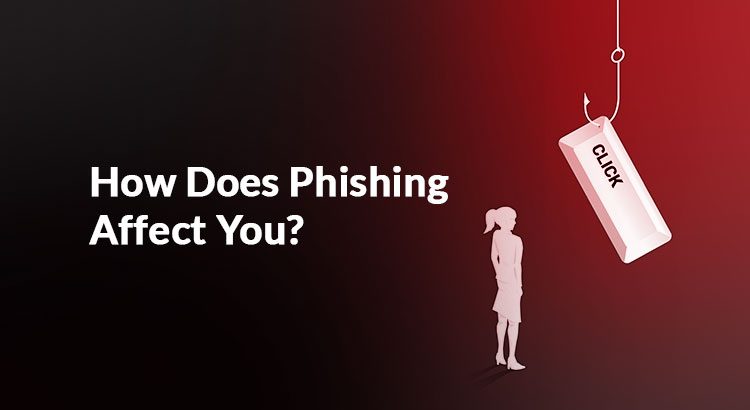
Phishing is a segment of cybercrime that involves tricking people into performing a dodgy task. By doing so, the user may make their network system weaker and vulnerable to a well-structured cyberattack. For example, you may receive an email from an unknown sender who’ll ask you to perform a simple task in return for money.

The amount tends to be somewhat absurd. In most cases, after you complete the job, the sender will hack your network system or steal information.

According to a report published by the FBI, phishing is the most prevalent form of cybercrime performed in 2020. The study also mentioned that the number of victims was almost doubled in 2020 since the previous year (114,702 to 241,324 incidents).

Another report (provided by Verizon) stated that amongst the total numbers of attempted breaches in 2020, 43% were performed through phishing.

Although the phishing attempts seem practically illogical and devious, some of the well-written mails can certainly convince you. This was evident in the year 2020 when the USA-based organizations, experienced almost 74% successful attacks.

Nevertheless, if you are careful and have strong network security, you might be able to avoid even a well-structured attack altogether.

Types of Phishing

Phishing is usually used as an umbrella term to designate different cybercrimes with a strong sense of similarity. Here are some of them.

  1. Smishing

A smishing attack generally involves a text message to get the attention of an individual. This type of SMS will contain a phone number or a link that may open the floodgate of the scamming attempts.

In some cases, the text message may also look like it is coming from your registered bank. In this aspect, the sender will ask you about your SSN, bank account number, etc.

Smishing is one of the most common types of phishing and has risen by almost 328% in the year 2020. So, it is essential for you to be wary about the same.

  1. Whaling

Like smishing, whaling is also a type of targeted phishing, which goes after the more affluent organizations. Usually, a whaling attack is attempted on the CFO or CEO of a corporation or management business.

In a whaling email, you may get informed that your company is getting sued for some awkward reason. So, you’ll have to click on a link to get more details.

The link will take you to a separate page where you will be asked to provide crucial information like bank account number or tax ID.

  1. Spear Phishing

Spear phishing, essentially, intends to scam a specific group of people, such as the system overseers, of a business. Unlike whaling, spear phishing emails will try to exploit your personal details. The information regarding the target is reportedly taken from social media.

A spear phishing mail can be categorized by detecting a sense of urgency. It may also relate to a task that goes against the norms of your organization.

The e-mail of the sender of a spear phishing mail tends to be spoofed. Therefore, you won’t be able to track back to the attacker in any way.

Although being a more target-specific segment, spear phishing is still pretty common. In 2020, almost 30% of phishing attacks were known to be done by following this procedure.

How Does Phishing Affect an Organization or a User?

A successful phishing attempt can affect your organization from several directions. Some of these are as follows –

  • Overload the communications system and damage the servers severely
  • Loss of crucial details, such as bank account number, SSN, and other related information
  • Leak of consumer details or marketing strategies

How to Prevent Phishing?

Going through hundreds of spams and detecting anomaly can be quite irritating for an individual. So, it’s better to use a tool that can prevent the senders from sending these emails. Here are two security solutions that may help you out.

  • UBA (User Behavior Analytics): With this tool, you can perform data profiling and find out malicious profiles on Gmail right away. Furthermore, it provides you with detailed insights on several anomalous profiles to keep you wary about them. Finally, it also has the capability of identifying anomalies on your server and detects them efficiently.
  • EPM (Endpoint Privilege Management): EPM can provide you with an on-demand privilege system. Thus, the help-desk integration will be a lot easier. Due to the endpoint privilege, no unauthorizedperson can enter a classified area in the network. Moreover, it can also blacklist malicious applications and mails by detecting if they are a threat to your security or not.

Conclusion

Phishing, or any other form of cybercrime, has become extremely common throughout the world. Thus, it is imperative for you to use a specific tool that can help prevent such attacks and protect your organization’s network environment. Hopefully, implementing UBA and EPM in your system can be beneficial for your purpose.
Insider Threats: Types, Risks, How to Prevent Them

Cyber threats have increased alarmingly over the last few years. From individuals to organizations, and government agencies, everybody is under constant threat of losing personal and business data. In this digital world, it doesn’t take an expert to understand that aspects like malware, ransomware, phishing, pharming, and more, all pose a significant risk to both organizations and individuals.

Businesses, in particular, need to take drastic measures to prevent cybercrimes. Of all threats that pose harm to an organization, insider threats are considered the most dreadful. Unlike other security risks that occur from the outside of an organization, insider threats originate within the organization. The internal actors involved in malicious activities could be a board member, business partner, consultant, or a former employee. It doesn’t always mean that the individual must be a current member of the organization.

According to the Verizon Data Breach Investigations Report generated in 2019, 34% of data breaches involved internal actors. So, it is a growing concern for businesses to keep their data protected not only from the outside entities but also from the internal entities.

No one can be trusted in this data-sensitive world. Businesses have to follow robust security measures and practices to keep their sensitive files away from any malicious employee. This is a highlight on insider threats and discusses on why it is a growing concern among organizations, and how to prevent them.

What are Insider Threats?

Insider threats are actually malicious behaviour by any vendor, an employee, an ex-employee, or even the janitor. Anyone who has valid access to confidential data files and network with malicious intention can be considered as an insider threat. The unfortunate reality about insider threats is that the people you trust with your systems and data are the ones responsible for them.

In other words, an insider threat can be seen as the potential of a company insider who had or has access to a company’s assets to use their access, either unintentionally or maliciously, to indulge in activities that could negatively impact the business.

Insider threat is also known as an insider attack as in some cases, the individual actually acts to compromise the organization’s computer system and network. Companies essentially focus more on tackling external threats, which makes them susceptible to insider threats. It could turn out to be a costly mistake if you disregard insider threats, leaving your sensitive information exposed. This is why it is vital that you understand different types of insider threats and what risks they pose so that you can develop a strategy to prevent or limit them altogether.


View All Video


Why is it risky for an organization?

Insider threats are the dangers inside the organization. They can be summarized in the following three drivers:

  • Ignorance/ Accidental– Employees whose lack of awareness of procedures, protocols, and data security exposes external threats to the organization
  • Negligent– Employees who weak approach to procedures, protocols, and data security exposes external threats to the organization
  • Malicious Intent– Employees who intentionally exploit and misuse their privileges like special access to harm colleagues or company

Let’s understand the risks an enterprise could face due to insider threat with the following examples:

  1. Multinational Bank: A malicious bank employee stole personal data and account information of 1 million users and provide them to a criminal organization
  2. Global Beverage company: An insider stole a hard drive filled with information related to company secrets
  3. Social Media: A malicious insider abuses his privilege to stalk women
  4. Reputed Automobile company: A security engineer sabotaged the networks and systems and sold proprietary data to the competitors and third parties

These are enough to understand the risks associated with insider threats. To protect your employees, data, systems, and facilities, you must prioritize insider threats and it should be viewed as a shared responsibility among the teams. While you may not be able to prevent it from happening entirely, you can minimize its probability and manage the impact. For this, you will have to understand the types of insider threats.

Types of Insider Threats

While an insider threat strictly describes malicious behavior, there is a defined spectrum of insider threats. Insider threats vary significantly in intent, access level, awareness, and motivation, hence they are not all alike. With each of its types, there are several technical and traditional controls that you can take to bolster identification and prevention. According to Gartner, there are essentially four different types of insider threats. They are:

  • Lone Wolf

As the name suggests, lone wolves prefer working independent. They act maliciously without any external manipulation and influence. If lone wolves have an elevated level of company privilege, they can be extremely dangerous. Job roles like DB admins and system administrators are highly likely to become insider threats. They should be monitored regularly regarding their activities. One perfect example of a lone wolf with Edward Snowden. He used his privilege to access classified systems and leaked information related to cyber espionage at the National Security Agency (NSA).

  • Collaborator

A collaborator is someone who cooperates with third parties like competitors and uses their privilege to access information and provide it to the competitors. Such insider threats steal proprietary information, causing disruption to normal business operations. They do this for monetary gains as the third parties shower them lots of money just to provide them with insights. The insights could be anything from the audience demographics to product design, sales strategy, and more.

  • Goof

Goofs are arrogant or ignorant users who do not act maliciously or show their intent but take potentially harmful choices. This type of insider threat believes it is exempt from security policies. It is surprising to know that the majority of insider accidents (about 90%) are caused by goofs. A goof can be a user or an employee who stores unencrypted personal information in a cloud storage account despite knowing that it is against the company’s security policy.

  • Pawn

Pawns are users who are manipulated into doing malicious activities. In the majority of cases, pawns prove to be insider threats unintentionally via social engineering or spear phishing. An employee may download malware to their system or disclose important credentials to someone unimportant, and more. They do such things unintentionally, and this is why they are called pawns.

How to Prevent Insider Threats?

  1. Monitor activity logs, emails, and files on your core data sources
  2. Identify and determine where the sensitive files are stored
  3. Find out who has access to particular files and data and who should truly have access to them
  4. You are advised to establish and maintain a least privilege model within your business model
  5. Apply security analytics and monitoring so that you are alerted on abnormal behaviors like increased file activity in sensitive folders
  6. Educate and train your employees regarding the importance of data security

Conclusion

Insider threats are omnipresent. While you cannot completely eradicate it, you can take certain preventive measures to minimize the loss. The objective is to understand the security risks, both from outside or inside the organization. From implementing latest and advanced security measures to spreading more awareness among the employees about the new security protocol, being proactive and vigilant is the only way to prevent insider threats.

Everything You Need To Know About DevSecOps

DevSecOps or Development and security operations indicate a software engineering architecture designed for IT security. The security is developed early on in the ‘tool and application development’ lifecycle. It helps to reduce risks and increase its business and IT objectives. DevSecOps plays a crucial role in the development of particular software. To understand more about DevSecOps, its benefits and more about the tool, check out here.


ARCON is named a Leader

in the 2021 Gartner Magic Quadrant for Privileged Access Management Report

Read Report


About DevSecOps

DevSecOps is a tool that integrates security practices into the DevOps processes. It works on “security-as-a-code” technology, fostering communication and collaboration between the security team and software developers.

Previously, the software developers had concentrated on DevOps and a separate security team on vulnerability monitoring, detection, and management.

Nonetheless, with time, the two-tiered structure has been replaced with a continuous delivery approach system. It is none other than DevSecOps, helping organizations to incorporate agile and lean security testing tools. Using the software will not interrupt the delivery cycle or slow down any of your processes, and it is the most important thing in today’s time.

Benefits of DevSecOps

Today’s organizations require easy and quick cloud computing solutions, containing flexible data solutions and storage, and other things. There were times when DevOps was sufficient for developers. But it failed to meet the security aspects, which was further attained by DevSecOps. It encompasses both security and DevOps by integrating security in the software development process. Many benefits indicate why organizations choose DevSecOps for software delivery, and they are:

● Cost-efficiency

The solution helps creators in detecting and addressing the security aspects quickly. They can do this step at any time throughout the delivery cycle while limiting the risks. The time-insensitive security vulnerabilities will protect the end-users and the organization from being a victim of cybercriminals. Additionally, the developers can decrease outages and downtime by increasing the speed of the response.

● Enhancing the overall security

The software helps in reducing security breach and strengthen monitoring, security auditing, and notification efforts. A single flaw can put the entire organization in trouble, affecting the image and putting their revenue in danger. But due to DevSecOps, the software developers are better equipped now and can identify security threats. It is done before they cause any damage to the business, which is a significant aspect.

● Maintains transparency

DevSecOps has encouraged security teams and software developers to work side-by-side. It has resulted in maintaining openness and transparency, increasing efficiency and productivity. Not only that, but it also promotes continuous management. By monitoring the failures and successes of an organization, the organization can find out the best result to eliminate problems. It has helped to enhance the entire software delivery cycle and improvise the software delivery efforts. The organization can also use metrics differently, which eventually separates them from the competitors.

Sooner or later, DevSecOps could become the first priority for companies globally. It’s because the earlier an organization incorporates the technology, the sooner results can be enjoyed.

DevSecOps and DevOps: What is the difference?

The DevOps is an amalgamation of two aspects of computer science. Here Dev indicates software development, and Ops refers to information technology operations. The objective of DevOps is to enhance the speed of software delivery enabling continuous communication, collaboration, integration, and automation.

Briefly, the demand for DevSecOps has increased dramatically, and more than 74% of IT professionals have claimed to use it. DevSecOps uses both SecOps and DevOps, creating a cyclical practice for technology operations, software development, and cybersecurity. The objective is to enhance the development of a secured codebase. Here are some key elements of both DevSecOps and DevOps that will help you understand the same.

Key aspects of DevOps

  • Infrastructure as Code (IaC): It is a way to use code to manage and automate computing resources, like virtual machines and physical equipment, etc. IaC is also used in automating maintenance and decreasing the time spent on overseeing IT operations.
  • Policy as Code (PaC): It is a way of using code for automating and managing procedures. Policies include defining the proper use of technology IT practices, the standard security, etc. it helps make the policy available in the code format enabling automated deployment and testing.

Key aspects of DevSecOps

  • Automating security:Automation is a key aspect in every stage of the development lifecycle. It helps the team to handle more security responsibilities in a short span. It also includes compliance monitoring, automated code analysis, security training, and threat investigation.
  • Continuous feedback loop: It ensures every team member is promoted to enhance the maintenance and development of the tool frequently. Getting continuous feedback will help in monitoring the software threats and providing security professionals to eliminate threats.

In a word, DevSecOps has increased the development time while ensuring security while DevOps concentrates more on security. Every company must start using DevSecOps if they wish to save their reputation and eliminate becoming a victim of hackers.

Getting started with DevSecOps

You must have already done so much hard work in integrating different operations in workplaces. If not, it is the right time to consider the perfect solution to secure the software development process from beginning to end. PAM or Privileged Access Management can be a great way to begin with. Here’s why:

It is an ideal solution using which you can control, manage, and monitor privileged user activities. It offers the IT team a centralized policy framework governing and authorizing users depending on specific responsibilities and roles. The tool will ensure security to every system by implementing the least privilege principle.


The bottom line

DevSecOps helps to empower companies and takes a proactive approach to security. The invention of the new technology has helped software developers and security professionals to work hand-in-hand. It has led to the identification of security vulnerabilities and eliminating them before penetrating the organization.

Companies that have already incorporated the tool have started receiving the benefits. It offers the security and software development team an effective and user-friendly tool. With that, maintaining transparency, communication, openness, etc., has been smooth. After knowing everything about DevSecOps, are you ready to incorporate the solution into your company? Integrating successfully will enhance the daily operations and save your company from cybercriminals.

An Insight on Cyber Threat Intelligence

What is Cyber Threat Intelligence?

“Knowledge is power”-who is not aware of this universal truth? Not just in personal upbringing, but also in cybersecurity, knowledge is the master key to enrich ourselves. The ability to observe, know and analyze malicious IT/ cyber activities or threat actors encourages security professionals to do more R&D about the IT risks that organizations face.

In order to make that cyber knowledge usable, it requires a dedicated team with visibility of modern cyber security. Once cyber threat information is collected and evaluated from any given IT ecosystem of an organization, it is then analyzed by the cyber experts rigorously to create an environment that adds value to the IT risk assessment. This information is all about cyber threat patterns, extent of IT risks and vulnerable areas of IT security. Cyber Threat Intelligence reduces uncertainty for the stakeholders while seamlessly identifying threats and opportunities.

Cyber threat intelligence: Why is it gaining importance?

Cyber Threat Intelligence helps organizations to accumulate raw data about both emerging and existing cyber threats from different sources. After hair-split analysis of that data, the risk management team produces detailed reports to the management that contain strategic planning to automate and improve IT security control solutions. With this, organizations stay alert from the risks of APTs (Advanced Persistent Threats), zero-day threats and risks arising from malicious intent of the end-users.

The cyber threat intelligence team drives organizations to:

  • Continuously update the volume of cyber threats, including the IT security vulnerabilities, probable targets of exploiting and the number/ pattern of malefactors.
  • Helps organizations to be more proactive about cybersecurity threats rather than reactive in case of any cyber incident
  • Ring the precautionary alert bell for the internal IT team, stakeholders and end-users in the enterprise network to keep informed about the newest threats and the potential repercussions on business continuity

Explore ARCON User Behaviour Analytics

Click Now


ARCON | UBA a robust Cyber Threat Intelligence Tool

To address the complex IT security use cases, the Information Security market today is sprawling with cyber threat intelligence tools.

Malicious end-users, however,  pose the biggest cyber threat. ARCON, being an industry leader in threat predictive and analytical tools, has therefore developed User Behaviour Analytics (UBA) solution that comprehends and analyzes the risky IT elements within the periphery by leveraging AI/ML. 

Deploying ARCON | User Behaviour Behaviour (UBA) tool mitigates IT risks arising from suspicious behaviour profiles and anomalous end-user profiles (insider threats). Both as a standalone and add-on solution (when integrated with PAM, this tool helps the IT security team to provide additional visibility on end-user anomalous activities. Moreover, the solution increases end-user productivity by configuring baseline activities. So, when they deviate, the solution raises an alert. 

ARCON | UBA assists IT security team by:

  • Seamless monitoring of every end-user behaviour even in granular level
  • Raising alerts of malicious activity on real-time basis  
  • Providing detailed report of every IT task performed under supervision

Conclusion

Cyber threat intelligence has proved beneficial at every level of IT operations in an organization. The IT community in modern times counts on cyber threat intelligence because the behaviour-based analysis and structural analysis are assessed frequently. Strategically applied cyber threat intelligence can provide better insight into cyber threats and allows smoother, more targeted response to cybersecurity.

How to prevent Brute Force attack?

More than 80% of security breaches involve Brute Force or stolen/ lost credentials. In the recent past, it has increased because of remote workforce. Following a few steps can safeguard the critical systems in an enterprise from being a victim of Brute Force. This brief guide today would help you to know about Brute Force Attack, the motive behind this, and ways to prevent it.

Brute Force Attack: An Overview

A Brute Force attack is a conventional way to compromise a website by stealing the credentials. It happens when a person is repeatedly guessing the login credentials and trying to get access to the elevated accounts. Today, cybercrime has risen exponentially because of the incorporation IT security mechanisms. Due to that, it has been easier for hackers to find out more loopholes to compromise passwords. The correct instance is to crack a high-profile eight-character password in just six hours or lesser than that.

Motives behind Brute Force Attacks

A Brute Force attack is considered to be the first step for a hacker before obtaining unauthorized access. Considering its nature, they target several organizations at a time. It is a way of letting the automated attackers get a match. The motives behind Brute Force Attack are:

● Stealing Credentials

Hackers might need your credentials to use for a different purpose fulfilling their needs. So, they use the process, hoping to get a match and collect the information.

● Spoiling Reputation

By accessing confidential details of the company, cybercriminals can attack the firm by threatening them or spoiling their goodwill. This way, the organization might face huge losses, and malign the reputation.

● Looking for hidden web pages

Another motive of the cyber crooks can be searching for hidden web pages within the website. Here the hackers use guesses to find the URLs of pages in any attempt to get your details.

● Demanding Ransom

After stealing the details, attackers may ask for some money in return for the documents. But the fact is even after giving the cash, they may not provide the details and continue accessing the critical systems. Thus, prevention of Brute Force attacks should be prioritized.

Different ways of Brute Force Attack

Before knowing how to safeguard an organization from Brute Force attack, understanding how it happens holds the greatest importance. Let us analyze closely.

  • Simple Brute Force Attack: Many methods are used to find the logins and passwords in this process. It is done to crack local files, as no restrictions are there on the number of attempts.
  • Credential stuffing: In this method, hackers use logins that have appeared in a different place. It can be social media platforms, etc. If hackers can get into one website, they can break others as well.
  • Dictionary Brute Force Attack:Here, a special dictionary attack is used to pick the most common password. For examples, phrases like welcome, admin, etc. So, never use such terms while setting passwords.
  • Hybrid Brute Force Attack: It is a mix of various types aimed to gain access to your confidential information. The process is an amalgamation of both simple and dictionary attacks.


How to prevent Brute Force Attacks?

Here are some ways:

● Privileged Access Management (PAM) solution

It is a perfect solution used for managing, controlling, and monitoring privileged user activities. It offers role and rule-based restricted access, ensuring all accesses are safe. By using the system, you can safeguard your entire structure and eliminate Brute Force Attacks.

Read more about Privileged Access Management (PAM) solution 

● Using stronger passwords

The most effective and easiest way to prevent attackers from accessing your data by creating a strong password. Somewhat complex passwords create a different level of resistance from the hackers. The password should never contain any keyword that can easily guess.

● Using Captcha

Captchas help in differentiating real users and spam computers and are a reliable way to eliminate data thefts. By incorporating captcha, there can be delay in the log in time. So, hackers will surely face a hard time.

● Reducing the number of login attempts

Another effective way to stop hackers from illegal accesses is by reducing the number of login attempts. This happens due to continuous data selection. So, establishing this step can help to avoid attacks.

● Enforcing multi-factor authentication

Multi-level user validation process is required for logging crucial account. Different ways used are retina scars, fingerprints, email message, face scans, SMS codes, etc. Nowadays, many organizations are using this to stop attackers from getting access.

Read more about Privileged Access Management (PAM) :  Multi-factor Authentication feature

● Getting support from the best web security operator

Over time, it has been seen that the best way to avoid Brute Force Attack is by opting for ongoing website support. It helps in protecting the website depending on the newest trends and ensures data protection.

Final thoughts

By opting the best solution, preventing Brute Force attacks can definitely be easier. The right platform and reliable software solutions can help in preventing and detecting attacks through continuous and proactive monitoring. It is the right way to protect organizations’ data assets from getting in the hands of the wrong people.

Top 5 Business Benefits of Robust Access Control Environment

Overview

Today, businesses are more competitive than ever thanks to the increased role of digital technologies. Digital technologies have become the core of any business activity. Cloud technologies have increased business and IT operational efficiencies. Business meets have become virtual, client/ vendor payments are done online, and business operations are done remotely. Even business events have turned into webinars and virtual summits. 

In this backdrop, enterprise end-users are always connected to devices, systems and applications.

Due to this digitalized and interconnected IT ecosystem, organizations, however, are more vulnerable to cyber threats. Access controls are major worries. 

Hence, robust cybersecurity, especially access controls, are no more optional, rather it is an essential component. However, the question is whether all the organizations are adopting adequate and relevant IT security measures to reinforce access controls?

Here are the top 5 benefits to businesses from strong access controls 

Access Control and business continuity & agility 

Would anyone of us prefer to stand in the queue to withdraw money from the bank, or pay electricity bills or recharge mobile phones in this era? The answer is highly predictable. In the changing times, organizations need to submit themselves to the demanding trends, else that organization might fall back beyond recovery. 

Today, if we take an example of any organization from any industry, we will find that most of them have adopted new technologies, set up new IT policies to adapt to the digital age. Why? Because, business agility can be attained only by adapting quickly to technologies. 

Nevertheless, the agility will come to a standstill if technologies lack strong access controls. 

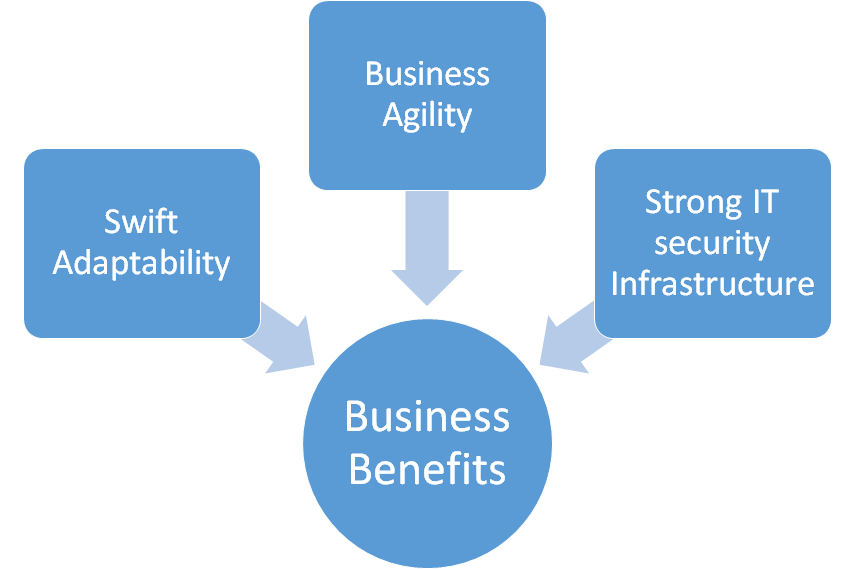
A strong IT security infrastructure that includes access controls not only protects the IT assets from cyber risks, internal threats and frauds but also responds rapidly and flexibly to customer demands. It offers agility to business

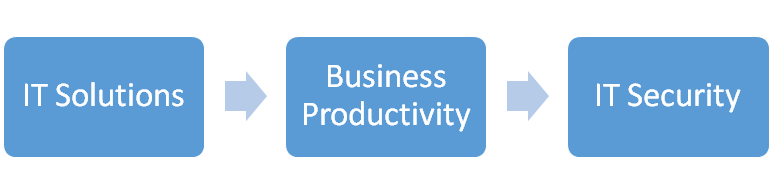
Access Control and business continuity & agility

Access Control and Increased Productivity

Access Control and Increased Productivity

Business without productivity is like a ‘fish without water’. Business expansion and growth is directly proportional to the productivity of any business. Modern enterprises always adopt advanced IT tools (software and applications) to enhance productivity and ensure business continuity. But that productivity could take a hit if those advanced systems lacked security controls to safeguard IT assets from imminent IT threats like privileged access abuse or misuse/ abuse of applications from malicious end-users. 

Access Control and Compliance

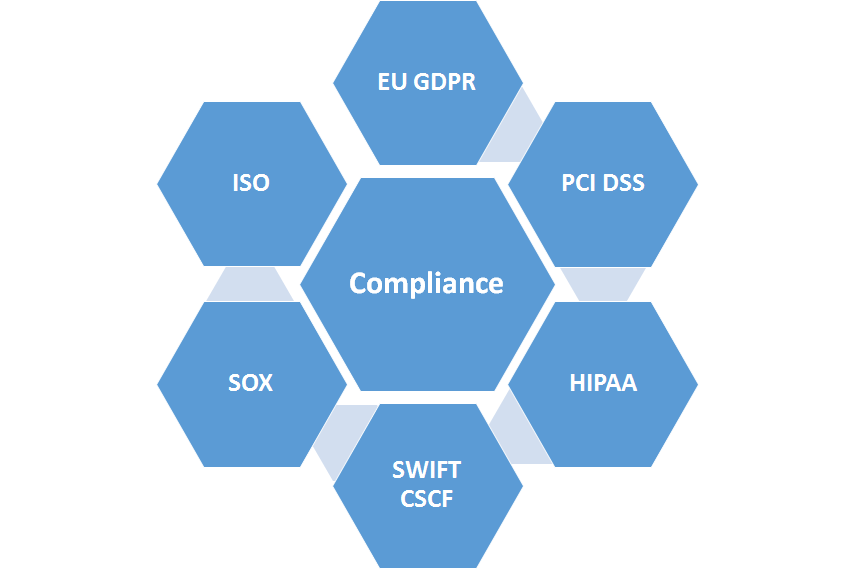
A resilient access control environment empowers enterprises to meet various IT standards and regulatory compliance requirements. Advanced Information Security solutions such as  Endpoint Privileged Management, User Behaviour Analytics, Privileged Access Management, Security Compliance Management, Identity and Access Management, Single Sign-on etc., help to comply with the standards like EU GDPR, PCI DSS, SWIFT CSCF, HIPAA, SOX etc.

Access Control and Compliance

Access Control and IT Governance

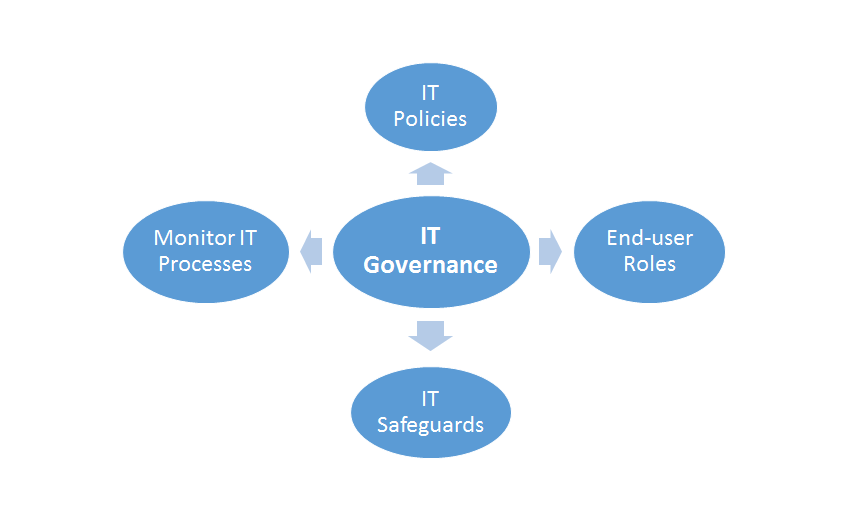
One of the most important requirements for enhancing perimeter security is robust IT governance. A strong IT governance is possible only through enforcement of unambiguous IT policies and access controls along with well-defined end-user roles & responsibilities. There must be adequate IT safeguards to manage and monitor people and day-to-day IT processes. Access control enables organizations to reinforce IT governance by implementing the above mentioned security steps. 

Access Control and IT Governance

Access Control and Customers’ Trust

There have been numerous instances where a single data breach or other IT anomaly has had a large impact on business reputation. Therefore, protecting the digital identity of the customers, sensitive information and personal information is essential to win the trust of customers. Access control technologies help to safeguard the digital information and digital identities of customers. 

Conclusion

Technologies have transformed the way businesses do business. Nevertheless, all the benefits of technologies would ebb without robust access controls. A robust access control environment is a need of the hour. It mitigates IT threats and helps in strengthening the customers’ trust.

Zero Trust: A Guide for Beginners

The scenario of dealing with a well-planned cyberattack has become quite prevalent in the world of IT. Thus, many software and hardware programs are also being launched in the market, which can potentially prevent these threats. However, the ZTNA (Zero Trust Network Access) framework seems to be the most reliable one.

Due to the COVID-19 pandemic, most organizations are still going for remote work. Thus, the security threats have become pretty prominent again. However, this is where Zero Trust comes in. It helps the workers of the association to assess their network security constantly through identity authentication.

This way, it becomes easier for them to find the risk, even before it could affect the system. Nonetheless, before you begin implementing the module on your system, you will need to learn more about it. Hopefully, this write-up is going to help you out in this aspect!

Zero Trust Network Access: A Brief Overview

In essence, Zero Trust is not like any other security system you can acquire from the market. Unlike most others, it offers a fundamental shift to the traditional security method and tries to simplify it in a unique way. For example, when working in a ZTNA-implemented network, you will need to prove yourself trustworthy and non-malicious.

Through its complex modus operandi, Zero Trust tries to restrict the common access to the entire network. It does so by isolating each and every application that is operating on it. The isolation is implemented based on authentication, user permission, and verification.

Let’s understand the concept through an example. Consider the network system of your organization to be a house with a lot of rooms. You will need to use a proper key to enter through the front door. After getting inside, you will need a unique key to get into either of the rooms. So, even if you have gotten access to the room, you will need to ask for permission again to get into somewhere else.

This way, Zero Trust aids an IT organization to operate and protect each of their cloud-based network modules in a proper manner. This sublime shift to basic security function can not only help you to prevent the outside attackers but also flush out the insiders.


Watch more ARCON videos


What are the Advantages of Zero Trust Security?

The Zero Trust system is one of the rare security modules available out there, which guarantees to prevent cyberattacks. According to an expert in the field, Michael Hornby, it can be even more efficient than an AI-based software program. So, let’s quickly check through its advantages to learn more about the module properly.

  1. Ideal for Remote Working Environment

Unlike most other security modules available out there, Zero Trust can offer secure and safe remote access to almost every user. It is, in truth, much more superior than a VPN system, which can cater to the users only at a single location. Moreover, it provides too much network access as well, which, in turn, can prompt security issues.

Conversely, with Zero Trust, you can make the network system of your organization a little bit more lucid and dynamic without affecting its security. For instance, with it, you can create access policies on the basis of attributes and identities rather than relying upon IP addresses.

Moreover, it offers the ability to modify privileges and isolate crucial systems to make your whole infrastructure more scalable. Thus, the members of your organization can become much more efficient and resilient to cyberattacks.

Besides, Zero Trust also offers superior control over the cloud-computing system, which is the prime point behind remote working. It aids with almost any audit-related procedure and improves the overall agility even more.

  1. Easier Integration

If your organization is not using a cloud-based system, then you probably already have a wide array of private servers and networks. So, if you wanted to integrate any other security module on it, then you might have had to go through a lot of different procedures.

However, it does not happen in the case of the Zero Trust system. It is quite easy to implement and integrate. Moreover, it also has a flexible base. So, it can complement almost anything and offer a transparent and seamless authentication procedure.

  1. Unparalleled Security

As mentioned before, Zero Trust’s ability to provide security is pretty unique and excellent in its own accord. It does so by dividing your organization’s network system and does not let anyone else enter another server without authentication. This, in turn, can eliminate both internal and external security risks quite efficiently.


 Download Zero Trust Whitepaper


Why Should You Implement ZTNA alongside ARCON?

The ZTNA framework, indeed, can be ideal for protecting the network system of an IT organization and assess the risks properly. However, if you wish to protect the whole environment properly, then it alone will not be enough for you. Aside from it, you will need to use something else too. In this aspect, nothing would be better than the Privileged Management System of ARCON.

The module was specifically designed to integrate with ZTNA sublimely and improve its overall performance. Moreover, it can protect some of your crucial profiles all by itself once you have installed them correctly. The PAM solution has three layers of security checking component, which includes – MFA and Adaptive Authentication (such as location check and device check).

It prevents an identity to access classified systems of your network unless he or she has the desired level of trust. You can establish the same through the overall connection time and usage of data. Just like the ZTNA framework, PAM, too, helps an organization to operate remotely and without using a VPN. Thus, in essence, they complement each other perfectly.

Conclusion

The time to retool and re-establish the security system in a unique way to prevent cyberattacks has come. Using the conventional methods, especially in this aspect, is not going to be ideal at all. So, instead, you will need to opt for something sophisticated and adequate, like PAM and ZTNA, to bolster your network environment. Hopefully, you will succeed in it. Good luck!

Project Management and Cybersecurity: Mantras of Growth

PART 2

Following an engaging first day where the experts shared their views on how to enhance one’s project management skills, we were all set to welcome our news guest speakers on day two of the virtual summit. 

DAY 2

The speakers of day 2 included:

  • Mr. Jigar Mehta, Delivery Project Manager, Capgemini
  • Ms. Shruti Nair, AMC, ICICI Prudential
  • Dr. Rashmi Jain, Academician, Chetana’s Institute of Management & Research
  • Mr. Vivek Kedia, Founder, MobiTrail
  • Mr. Lalit Popli, COO, ARCON

The panelists of the panel discussion:

  • Mr. Vikaas Sachdeva, CEO, Emkay Investment Managers Ltd.
  • Mr. Ranjan Revandkar, Head – Information Security, Sun Pharma
  • Ms. Vandana Verma, Founder, Infoseckids
  • Commander Vinod Singh Ujlain, Retired Officer, Indian Navy
  • Mr. Vishal Samant, CIO, Mirae AMCMr.
  • Lalit Popli, COO, ARCON (Moderator)

The second day of the summit started with a compact session of Mr. Jigar Mehta, Project Manager, Capgemini, talking about the new wave of Project Management: “Lean-Agile”. The key extracts from the session are as follows:

  • The traditional way of delivering projects with the help of Waterfall methodology that goes with the flow of requirements, design, development, testing, deployment and maintenance.
  • Agile – the modern way of delivering projects is a set of principles for software development in which requirements and solutions evolve through collaboration between self-organizing teams and cross-functional teams
  • The three major characteristics of Lean-Agile principle are faster delivery, elimination of wastage, and built-in quality
  • Multiple teams work together in Agile methodology that is aligned to a common mission known as ART (Agile Release Train)

The second session of day 2 was on Customer Centricity by Design Thinking. Ms. Shruti Nair, AMC, ICICI Prudential and Dr. Rashmi Jain, Academician, Chetana’s Institute of Management jointly discussed this topic that revealed a number of avenues of customer behaviour and satisfaction. The key takeaways from this session are:

  • The importance of customer-centricity in any business lies in factors like satisfaction, testimonials, sharing of experiences and more – if there is no customer, there is no business
  • Customer-centric enterprises keep these aspects in mind always – focus on the customer, understand customer needs, think and feel like customer, and create a lifetime customer value.
  • Customer experience, customer emotion, customer loyalty and rational value describes the crux of customer-centricity
  • In order to create a customer centric culture in an organization, it requires relevant project management to measure and ensure customer satisfaction
  • Design thinking is a methodology where we can put ourselves in the customer’s shoes and realize the problem to offer the best of the best solution
  • Understanding of customer needs stands on four pillars – what he/ she says, what he/ she thinks, what he/ she does, what he/ she feels
  • The advantages of design thinking method are top priority of the users, focus on empathy, leading breakthroughs, value adds through customer delight, and business growth through collective knowledge

Now, coming to the last ‘trinity’ among the three, Mr. Vivek Kedia, Founder, MobiTrail, discussed ‘Incorporating Information Security into IT Project Management’. IT security or digital security is the core of a successful business growth strategy, hence, this session turned to be engaging. After a brief introduction of MobiTrail, he said there are organizations that are more sensitive to data security vulnerability (like the BFSI industry). He spoke about the traditional IT Project Management cycle where the IT security vulnerabilities lie.

  • The journey of a project starting from Ideation to Deployment consists of Information Security and VAPT Testing by the IT development team who are responsible for testing
  • Typically, InfoSec teams are small compared to developers though the scenario is changing drastically and IT organizations are giving equal focus on security teams as well
  • Security Testing teams are always overloaded and are under-equipped to handle evolving cyber threats.
  • It’s time for IT developers also to understand Information Security and they should know the security gaps and vulnerabilities.
  • Information security should be an integral part of any organization and not an afterthought.
  • CERT-IN certified labs can be the best standard solution today to ensure security preparedness – the latest certifications, standards and cyber threat patterns released and discussed in CERT-IN can help organizations to stay tuned with the necessary security measures


The next part of the session was taken over by Mr. Lalit Popli, COO, ARCON, who shared his insights on the “Importance of Identities and Privilege Management Users in Information Security” domain. The key takeaways from the session were:

  • Cybersecurity is protecting our cyberspace (critical information) from cyberattack, cyber espionage, malicious activities, privacy misuse and more
  • The challenges related to cyber security are inherent due to innumerable entry points to the internet and emerging threats are outpacing defense technologies
  • The expansion of cyber threat patterns are no more restricted to just organized cyber criminals – rather it has infiltrated in-house in the form of malicious insiders giving a rise in the demand for predictive IT security solutions
  • Phishing, Pharming, Man-In-the-Middle Attack, Targeted Attacks, Identity Thefts, Data Breaches, Misuse of Data Privacy, Spying on Confidential data assets etc. are expanding the threat surface limitlessly
  • Data is the ‘New Gold’ and thus data security concerns are rising as the question is no more “If it will be breached”; rather it is “When it will be breached”
  • Today data is in the cloud (even hybrid) resulting in almost 71% organizations suffering from data breaches or data breach attempts
  • Organizations count on super user identities to ensure smooth IT operations whereas malefactors also target on these identities, known as Privileged Identities, to steal business data
  • Privileged users are responsible for managing, monitoring and controlling privileged access across IT periphery in an organization – thus security of privileged access is the top priority in modern enterprises 

Towards the end of the event, there was a panel discussion among all the delegates and invitees as mentioned above. Mr. Lalit Popli from ARCON was the moderator of the session. It was the concluding session of the virtual summit. This esteemed panel covered all the areas that were showcased in the last two days and added their valuable inputs to ensure a complete knowledge sharing session.

  • How to stay abreast with the latest cybersecurity trends?

Mr. Vikaas Sachdeva contributed to this question by stating that the paranoia of a CIO is the key to stay updated with the emerging IT risks and the threat patterns. He added that organizations keep on adopting new technologies to stay competitive with the security trends. However, very few among them conduct regular audits to ensure security effectiveness as well as preparedness. Even minutest glitches should be addressed to avoid any catastrophic incident.


  • How does a CISO plan his/ her day of work?

Mr. Ranjan Revandkar responded to this question humbly by bringing the context of an age-old saying, “Devils never sleep.” Being a CISO, it is never possible for anyone in any organization to plan for a routine. Mr. Ranjan added that whenever there is an apparent end-of-the-day, a black-hooded hacker might start his/ her day at that time. The result is that a CISO’s day is not yet over. Hence, even if we plan a day’s work, it might not lead to accomplishment at the desired time. Any priority might arise anytime (even at the wee hours) and then a CISO is at work.


  • How is Information Security important to kids and parents?

Ms. Vandana Verma, being the founder of InfoSeckids and a core researcher of this project, explained that educating kids about what is right and what is wrong has become too crucial today. In this digital age, it is never possible for parents to restrict their children from internet access. Normally parents give in to the curiosity of today’s kids. Also, when parents are working, then keeping a smartphone with their kid is ‘apparently’ more convenient for instant communication to stay updated with their whereabouts. While countries from Europe and N&S America have already given utmost importance to cyber rules for kids, Ms. Vandana focused on this area of cybersecurity in India to prevent ‘digitally uncontrolled & unsecured’ childhood. Many parents today are not even aware that YouTube and YouTube Kids are two different apps. So, awareness is the key to ensure a digitally sound future for our next generation.


  • How does cybersecurity contribute to defence and the army?

While responding to this, Commander Vinod Singh Ujlain spoke about cyber warfare. While most of the confidential defence strategies are kept secret under government supervision, there are certain operational blueprints of the army that require complete secrecy. Earlier, it required secret locations to store the records, but today digital storage has emancipated the requirement of a secured access control environment. The extent of confidentiality is so much over here that the lieutenants or colonels are not updated about these strategic secrets.


  • What kind of team structure is ideal to ensure an impenetrable IT security cordon?

According to Mr. Vishal Samant, while answering the question, identification of the key personnels to appoint for a project is very important. Every individual has a different set of KRAs and it is upto the organization how they can utilize those KRAs for a successful project. Any project would also require a team of senior management who can keep a track of proceedings on a regular basis to ensure timely completion. A project coordinator also has to coordinate from all levels – including senior management to basic first level employees through clear communication. If there is any plan for introducing HRMS application for HR or ERP application for finance – any project would require involvement of all levels of employees with different roles and responsibilities. The conventional project organization chart helps enterprises to chalk out a proper project plan with a proper allocation of resources. 


Conclusion

The educational and knowledge sharing 2-day virtual summit ended with a thanks giving note. Dr. Madhumita Patil and Mr. Lalit Popli thanked all eminent speakers and panelists for making this virtual summit a grand success. This gathering of industry stalwarts added value to the whole idea of bringing the connection of customer, security and project management in the modern business world.

Project Management and Cybersecurity: Mantras of Growth

PART 1

About the Event

Project execution, customer satisfaction and cybersecurity are three components for achieving sustainable growth. Nevertheless, in the recent past, global organizations have been challenged. 

The recent pandemic and its implication along with a sudden shift in the work culture taught us many lessons. One of the most important lessons learnt is how individuals and organizations could improve their project management approach and IT security to ensure customer success. 

Therefore, ARCON, a global thought leader in the Information Security domain, recently organized a 2-day virtual summit by partnering with one of the top business schools from Mumbai, Chetana Institute of Management (CIM). 

The purpose of this 2-day virtual summit was to disseminate knowledge with everyone. 

The 2-day virtual summit: The New Trinity for Business Growth: Customers, Projects and Security included eminent speakers, revered thought leaders, academicians, industry professionals representing both ARCON and CIM. The experts shared their experiences and views  on the role of project Management and cybersecurity for business growth.

The virtual summit was divided into 2 days—25th June & 26th June 2021, from 4pm to 8pm daily. Here is a quick recap of day 1. 

DAY 1

The speakers of day 1 included:

  • Mr. Lalit Popli, Chief Operating Officer, ARCON
  • Dr. Madhumita Patil, Chief Executive Officer, Chetana Institute of Management
  • Prof. Shilpa Kajbaje, Faculty, Chetana Institute of Management
  • Mr. Prashant Neharkar, Enterprise Agile Coach, Majesco
  • Dr. Mahesh Luthia, Associate Professor & Area Chair – HR, Chetana Institute of Management
  • Mr. Sachin Jaiswal, PMO Lead at Accenture UK

The virtual summit was inaugurated with the graceful presence of Mr. Lalit Popli, Chief Operating Officer, ARCON and Dr. Madhumita Patil, Chief Executive Officer, Chetana Institute of Management. The overall objective of this summit was to highlight the W’s (What, Why, Where, Which) of Project Management globally and how digital security can play a crucial role in it. Above all, customer satisfaction.is the mother of all objectives desired by every organization behind any business decision. Prof. Shilpa Kajbaje was the first speaker of the day, who gave a lucid yet vivid presentation on Project management and its various components (an overview). The key takeaways from the session:

  • A project is nothing but a sequence of tasks that are completed to attain a certain goal
  • A project could be even a temporary endeavour with a definite beginning and ending
  • Various industries like IT, healthcare, automobile, banking, retail, telecommunications, media, education, construction etc. follow project management guidelines
  • Different Project Management standards/ models offer successful planning for projects
  • ERP software could be the base of projects in any organizations, though many organizations fail to ensure secured and successful completion of business projects 
  • The basic ingredient of any project is the need – if ‘need’ is not clear behind initiating any project, then chances of being unsuccessful is high
  • Almost 67% of global projects fail due to tendency of undervaluing project management which pinpoints that equal concentration of time, cost and quality is hardly followed

Mr. Prashant Neharkar, as the next speaker, continued to discuss the scope of project management in any given industry and how it ensures to achieve business goals. Here is a summary of what he discussed:

  • A successful project depends on the scope of work, manageable cost, adequate time and resources
  • A quality project requires a quality resource to ensure a quality output
  • Detailed blueprint of a project before initiation is mandatory, else it might crush
  • Project management life cycle includes 5 components: Initiating, Planning, Executing, Monitoring & controlling, and Closing
  • In any organization, to handle projects, multiple teams take part in the assigned responsibilities and share the success/ failures. They are development team, execution team, procurement team and the approval team

Dr. Mahesh Luthia, Associate Professor & Area Chair – HR, Chetana Institute of Management has shared his 360 degree view on a project manager and the key roles and responsibilities.

  • A highly skilled project manager ensures what to integrate, when to integrate and how to integrate planned/ desired projects
  • The scope management, quality management, communication management and resource management are the three areas taken care by a project manager
  • Owns an entire project delivery and thus focuses on strategic competence to ensure business success
  • 360 degree view of a project manager involves a talent triangle namely technical project management, strategic & business project management and leadership
  • The core competencies of a project manager revolves around project controls, leading project teams, commercial skills, communication skills and domain knowledge

Mr. Prashant Neharkar resumed his next session with his views on project to product mindset. To name a few brands like Ola, Swiggy, Oyo, Big Basket – all are an idea that got converted into a product. Now there are lots of projects around these products that opportunate these products with new business avenues. Here are key takeaways from the comparative analysis:

  • A project mindset leads to less business involvement and more task involvement whereas a product mindset has more creativity and less waste
  • A project is more client centric that has a start date and an end date; whereas a product is more market centric where there is no end of evolution
  • A project manager deals with people to meet the deadlines but a product manager always concentrates on adding something new to the existing and thereby adding value
  • Product management is indirectly value management where the customers experience ultimate satisfaction but for project management there might not be chances of value addition

Mr. Sachin Jaiswal, PMO Lead at Accenture UK was the last speaker of Day 1. He gave an in-depth presentation on the topic “Project Management Tools in the New Paradigm and with Globally Distributed Teams”. The key takeaways from the session were:

  • Every now and then in the ever-changing world requires tools to embrace the changes happening in industry and business
  • To explain the exact need for tools, we found that functional efficiency, stakeholder satisfaction, better decision making, improved communication, standardized approach etc. work as key reasons
  • Numerous tool selection criteria works as an initiator or deciding factor to ensure business continuity and customer satisfaction from the products/ services
  • As per different project management areas, there are different tools to ease the task such as workflow tool, repository tool, presentation tool, planning tool, time tracking tool, custom tool and also finance tool.
  • Leadership in Project management is inculcated through three matrices – Delivery Matrix, Financial Matrix and Operational Matrix

The sessions of Day 2 will be discussed in our next blog. Stay Updated.