Talk to us Risks to Watch

Prevent Disruption arising from Cyber Threats

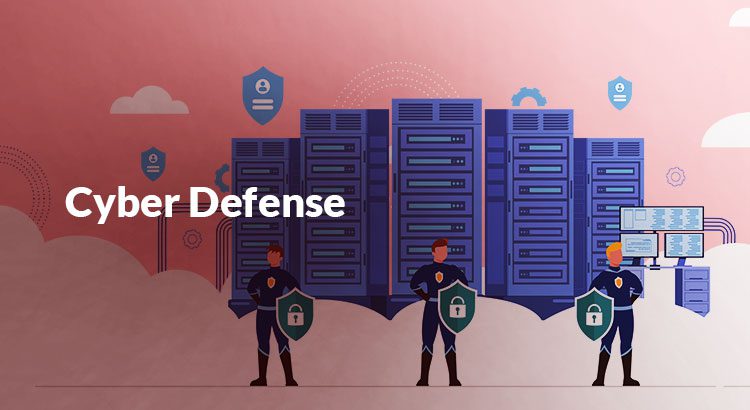
What is Cyber Defense?

“The best defense is a good offense” – ever came across this adage? Situations arise very often when protecting oneself becomes the best and only way to stay safe. 

In cybersecurity, the termcyber defense’ refers to the ability or capability to protect critical systems from cyber attacks. It also involves taking actions to predict risky IT actions and identifying vulnerable areas to counter intrusions. A typical cyber defense strategy is built upon three components: predict, protect, and prevent cyber threats.


Why is it Important? 

If organizations take proactive steps to ensure adequate cybersecurity in place, they will be able to avoid cyber attacks and prevent data thefts at the right time. With the best possible cyber defense strategies, organizations can ensure uninterrupted business processes round the clock. It builds the ‘trust’ between the organization and its stakeholders because in case of any cyber incident, the brand image of the organization is tarnished. Not only that, there are legal consequences that lead to huge financial losses.

Hence, a cyber defense strategy is a must to build  robust cyber defense: It mitigates the probability of:

  • Cyber attacks
  • Data breach incidents
  • Interruption in business process and business continuity
  • Financial losses
  • Reputation loss
  • Increase in legal expenses
  • Non-Compliance penalties
  • Breach of ‘trust’ among stakeholders


How is it possible? 

A best-in-class solution with adequate access control security features powered with AI and ML capabilities can ensure robust cyber defense in an organization. A Privileged Access Management (PAM) solution is the best bet in the modern cyber age to stay safe and secure from cyber threats. Let us see why PAM is becoming indispensable in organizations everyday.

Avoid Insider Threats: Knowing from where the attack is coming is the best way to secure data assets from any compromise. Most data breach incidents stem from compromised end-users. Due to the abrupt transformation in the IT environment, privileged identities are becoming very vulnerable. Since those identities are large in number for typical organizations and a gateway to confidential information, securing those identities proactively makes the overall IT infrastructure stronger.

In order to identify suspicious insiders, features like just-in-time privilege, seamless monitoring of the users, multi-factor authentication and frequent rotation and randomization of passwords help organizations a long way in mitigating looming IT attacks. Likewise, a PAM empowered with AI capabilities can help to understand the risky and anomalous identities that pose a serious threat to confidential information.

Ensure Best Security Policy: In the era of a complex and distributed IT environment, the major challenge that organizations face, lies with whether the users are doing what they have been assigned to do. Any deviation from their roles and responsibilities generally means that they are not doing what they are supposed to do. Herein lies the challenge and a PAM solution like ARCON | PAM identifies the suspicious user and notifies the IT administrator immediately.

We need to note here that organizations, even if they deploy PAM, adhering to the IT security policy is a must. The IT administrators, IT users and organizations need to follow the policy to ensure end-to-end security in the environment. If the policy is poor or ambiguous, it creates a gap between the three and overall IT security is affected. Moreover, a robust IT security policy shows the cyber readiness of an organization that builds the foundation of cyber defense.


Conclusion

A variety of individuals from different levels are involved to ensure cyber defense initiatives in an organization. Starting from the management who prepares the policies, the IT security team who ensures that the policies are in place and the IT users who follow the rules and regulations strengthen overall cyber defense. Nevertheless, regular audits help organizations to examine cyber security measures and offer recommendations regarding reset of priorities and implementation of new tools.
Increasing Cyber Threats on The Education Sector

Overview

According to a research by Microsoft Security Intelligence, 44% of overall cyber attacks in 2021 were in the education industry. This is alarming given the fact that cyber attacks are typically associated with banking and government organizations. 

Starting from 5 years old pre-primary kids to 20 years old college students – the entire education sector has come down to virtual mode due to the global pandemic. To learn alphabets, solve mathematical problems, know historical facts, teach chemical formulas – both students and teachers are counting on smartphones, tablets, laptops and desktops to ensure continuity of education. Not just in virtual classes, but also for the administrative procedures in schools, colleges and universities like new admissions, preparing academic calendars, examinations or even report cards have gone digital for convenience and safety. However, questions have been raised by parents, teachers and cyber experts – are we digitally safe in the education industry?


IT Security Scenarios in Education

Cyber criminals have targeted institutes to breach confidential personal data. The most vulnerable targets among them are :- 

  • Names, addresses, contact details of students and their parents
  • Social security numbers of students, their parents and local guardians
  • Transaction history and payment mode of parents who paid admission fees and tuition fees online
  • Digital annual report cards, promotion certificates, school-leaving certificates, character certificates and more
  • Institute database consisting of students’ records, teachers’ records, details of non-teaching staffs and even investor/ investment history

Since everything has been digitally transformed and most of the communication between students, parents and school authorities are done through emails, virtual meeting applications and other online modes. Thus the IT security risks escalate.


Where are the IT Risks?

The roots of cyber risks in educational institutions lies in both IT and non-IT circumstances. These risk factors in this industry are less discussed but highly affected. Let us delve a bit deeper.

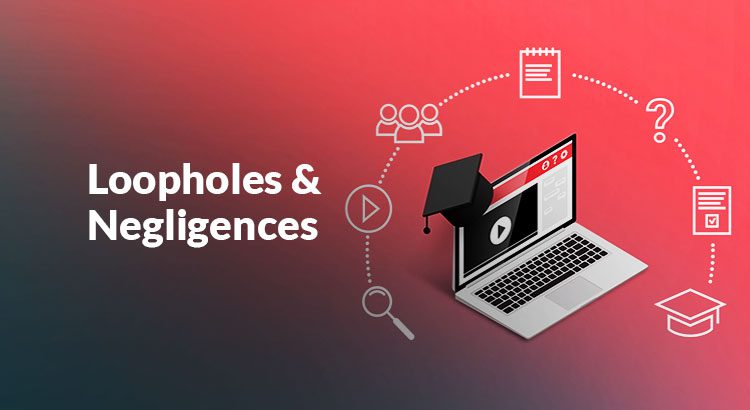
IT Loopholes Non-IT Negligences
Inadequate IT Security Policy: Due to sudden increase in usage of smartphones, tablets, laptops, many students (even teachers) do not have sound knowledge on how to store and secure personal information, day-to-day data of lessons, assignments and subject syllabus. Without a well-defined IT security policy, neither students, nor the teachers are able to ensure data privacy and data security. Lack of Awareness: This is a very common drawback of the education industry in the recent past. After the pandemic hit the globe, the digital teaching & learning mode turned into the only medium to ensure education. However, there remains a lack of data security and cyber security awareness among teachers, students and parents. This definitely increases risks. 
No IT Security Department: Large schools with best infrastructure and ultra modern facilities very often lack a well-defined IT security team that is the basic foundation to ensure cyber security in the school infrastructure. When there is no one accountable for a task, then the IT risks escalate uncontrollably. Poor Knowledge: Except students and teachers of Information Technology stream, it has been observed that there is poor knowledge about data security. In fact, as we discussed above, the importance of this knowledge is yet to be prioritized among the mass.
Lack of Robust Password Management: Strong Credentials are the basic resistance to critical information from unauthorized users. While teaching staff are following Bring Your Own Device (BYOD) practice for conducting classes, every database requires a robust password to ensure data security. If not followed, then different individuals accessing desktops or laptops from the school premises might face security threats from unauthorized users. Inadequate Funding: Necessary and timely budget allocation for IT Security measures creates a big difference whether the institute is serious enough to follow the IT security norms.
Cyber Espionage: This could be a serious reason for educational institutes where private information is eavesdropped and misused without the knowledge of the victim. Proper segregation of data with a strong password policy can prevent cyber espionage. No Training Process: If there are no adequate resources to manage cyber security, the educational establishments lack adequate training that could build the IT security awareness among the users.
Unsafe Wi-fi/ Network: This is another challenge faced by the teaching staff while accessing critical information during emergencies or even for regular activities. Unprotected network always bears a grave chance of IT security threats while accessing critical information.


Conclusion

Cyber Criminals have started to misuse pandemic as a weapon to target the education sector. The sudden shift from on-prem classes to remote learning has deteriorated the situation. With the students increasingly using their personal computers, laptops, smartphones and unsecured networks to join online classes, the threat vector of the education sector is proliferating. It’s high time for the education leaders to prioritize cybersecurity immediately and steer their organizations towards digital safety.

Some Obstacles that Compromise Enterprise Security

Overview

A lot has been discussed over remote workforce and WFH challenges in the last two years. The faster acceleration of WFA (Work From Anywhere) or hybrid work environment of late has enhanced productivity but at the same time created new challenges for the IT security workforce. In addition, there are several non-IT resistance that create severe hindrance inside the organizations while they toil hard to ensure security and business productivity. Hence, as new risks evolve, the attack surface expands and the security is compromised. 

The Non-IT Challenges

Some recent cyber incidents in the public sector and other industries have triggered warnings regarding non-IT threats among organizations.

  • Data breach in one APAC aviation organisation leaked thousands of passenger details due to malicious insiders
  • Details of Covid-19 positive patients were leaked online last year in Indian subcontinent
  • One of the Nationalized banks in APAC region suffered data breach of millions of customers due to password hack

All these incidents apparently pinpoint security vulnerabilities inside the organization. However, in the back stage, there could be reasons like cultural resistance and administrative hindrances that lead to data security uncertainties. When we talk about Non-adherence to the IT security policy or lack of robust password management and multi-factor authentication, the first thing that strikes our mind is ‘the organization lacks robust IT security infrastructure.’ Rarely do we think about the employee resistance to upgraded policies or non-acceptance of new technologies by the employees that might have resulted in data breach incidents.

Let us brainstorm the non-IT challenges that could stop organizations from an uninterrupted business process.


Obstacles from Non-IT Threats

The IT department in the organizations directly or indirectly face the non-IT challenges as a part of work culture. What has been observed from the trends, many organizations, especially from the public sector are challenged time and again by the workforce and administrative policies like allocation of budget on time, limited skill set and non-acceptance of challenges, resistance of  adoption of the right technology, reluctance to take ownership of new technology/ policy, confidentiality of the adoption of new technologies and more. These typical challenges elevate the IT risks to a new level and eventually it impacts the reputation of the organization.

  • Non-Acceptance of New Technologies: Requirement-based adoption of new IT technologies is very often prevented by the workforce. Resistance to any kind of changes, even if it is required, is a fundamental human tendency and it plays a big role in preventing implementing new technologies. As a result, the IT security infrastructure lags behind and the vulnerabilities increase in no time.
  • Limited Skill set: Many organizations face this quite frequently and commonly. Adoption of anything advanced and new completely depends on what kind of skilled IT personnels the organization has in its team. For instance, if an organization plans to adopt cloud infrastructure for maintenance of data, they need to adopt necessary security measures for the IaaS environment as well. However, if they do not have an adequate workforce with the necessary skill set, then technologically the organization falls behind. Eventually, the chances of cyber incidents aggravate.
  • Reluctance to take Additional Responsibility/ Ownership of the New Technology: This is a highly common constraint faced by organizations globally. An individual or a team who is habituated to handle a predefined set of responsibilities, denies to take any additional task even if it is critically required from IT security perspective. Hence, it creates an obvious set back in implementation of new technologies in the organization and subsequent chances of cyber catastrophes. 
  • Altercation among Employees due to Change of Roles: The changing dynamics in the IT landscape have increased access control challenges. As a result, there is a change in the roles and responsibilities of the employees. This alteration leads to friction among employees and hence there is resistance from the employees whenever any change is required. A candid and prolonged talk with the employees/ end-users delays in decision making and eventually the implementation is also delayed.
  • Non-Availability of Resources: Adoption of any new technology requires additional resources to understand it, deploy it, and train the functionalities among the team. Hence, non-availability of the required resources forces the organization to either refrain from adoption or keep the decision of adoption on hold. As a result, even if the organization is aware of what to be done to improve their IT security measures, they can’t act fast enough. 
  • Frequent Change of Management: If the governing bodies of an organization change frequently, then any kind of decision gets delayed. This is quite a common corporate challenge but it is critical for IT security. Change of person means change of mindset, altar of thought process and thus, the overall repercussions fall on the decisions. In case of adopting IT security measures, it heavily delays the process of adoption and eventually IT risks increase.
  • Diversity of Nationalities: This is an occasional challenge for large MNCs. When the governing bodies have multiple people from multiple nationalities and industries, the decision making is affected. Different opinions about necessary IT security measures vary a lot as geography and area of experience results in too many options on the table. For instance, a person handling IT security in the BFSI or Telecom industry might not give the same level of importance to IT security compared to that of other industries. Eventually, the critical IT decisions get postponed repeatedly or at times go nowhere. 
  • Outsourced IT Team: Many organizations count on Managed Service Providers (MSPs) or outsourced IT security teams to manage their overall IT infrastructure. As a result, any kind of alteration in the policy or any ad hoc requirement of IT security requires boardroom discussions or team meetings which at times delays the new technology adoption processes.

Conclusion

Organizations in the post-pandemic era have hastily embarked on advanced digital transformation to survive the cut-throat competition. The malefactors are continuously threatening them with evolving threats time and again. Every organization is ready to shield their digital assets from cyber criminals and thus counting on prompt adoption of new, relevant and adequate IT security measures. However, if the employees are reluctant to extend their helping hands on time, then the overall objectives of IT security is subdued.

Cybersecurity Threats to Look Out For in 2022 and How to Combat Them

2021 has been a record-breaking year for cybercrime. By the end of the year, cybercrime is expected to cost the world around $6 trillion. Ransomware attacks on high-profile targets are becoming more common and severe, drawing international attention. Ransomware attacks on Colonial Pipeline, JBS Foods, and other major companies made headlines in 2021. Hackers worldwide are abusing security flaws and detaining company, government, and healthcare data, making demands for tens of millions of dollars in payment.

Security teams and enterprise-level CISOs are hungry for new techniques and technologies to help them navigate this complex landscape. Security leaders across the globe are keeping a close eye on this year’s record-breaking attacks and attempting to predict the next one.

Defining Ransomware – Causes & Threats:

According to a definition provided by the US government’s CISA, ransomware can be defined as an “ever-evolving form of malware” designed for file encryption on a device, ultimately making it unusable. Ransomware attackers threaten to sell confidential data or leak exfiltrated data if their demands are not met. In short, hackers penetrate through weak security spots to steal sensitive data. They only hand over the data once their financial demands have been satisfied.

Many hackers take advantage of the turmoil and disorder during times of crisis, looking for potential monetary gain. According to the Harvard Business Review, companies’ payments to hackers increased by 300 percent in 2020. The dramatic spike in remote work and inadequate security protections at home provided the ideal opportunity for hacker groups to breach sensitive data.

With the emergence of the COVID-19 crisis in 2020, there has been an increase in focus on cyberattacks, especially in healthcare environments. As per a Comparitech study, ransomware attacks had a considerable financial impact on the healthcare industry, with over $20 billion lost in revenue, lawsuits, and ransom paid in 2020 alone. Over the year, 92 ransomware attacks impacted over 600 hospitals, clinics, and other healthcare organizations.

It is evident from the number of instances that hackers have taken full advantage of the pandemic crisis. In 2021 alone, there have been many high-profile cyber attacks worldwide, causing huge monetary losses. Here are some of the biggest ransomware attacks making headlines in the year.

What were the Scariest Cyberattacks of 2021?

Colonial pipelines

So far, the Colonial Pipeline attack is the most infamous of 2021. DarkSide, a Russian hacking group, admitted responsibility for the incident which targeted SCADA systems that link operational systems to conventional IT networks that are internet-connected.

The Colonial Pipeline attack had such a large impact because the pipeline is a critical component of the national key infrastructure system. The shutdown of the system disrupted fuel supplies all along the United States East Coast, causing chaos and panic.

Brenntag

Brenntag is a chemical distribution company based in Germany that operates in 77 countries. DarkSide aimed at the North American division earlier this year, intercepting data and devices on the vulnerable network and embezzling 150 GB of data. DarkSide demanded $7.5 million in bitcoin as ransom.

Brenntag eventually gave in to the claims and paid $4.4 million. Despite being slightly more than half of the original demand, it remains one of the highest ransomware reimbursements in history.

JBS Foods

In May, a high-profile ransomware attack targeted JBS Foods, one of the world’s largest meat processing companies. REvil, a Russia-based hacking group, is believed to be behind the attack.

It was confirmed on June 10 that JSB paid the $11 million ransom demand after consulting with cybersecurity experts. This massive bitcoin compensation is one of the biggest ransomware payments in history.

CNA

In March, another large insurance company was hit by a ransomware attack. The hacker team Evil Corp is allegedly behind the attack, which employs a new type of malware known as Phoenix CryptoLocker. On March 21, CNA’s network was struck, and the hacker group encrypted 15,000 devices, along with many computers used by employees working remotely.

It is abundantly clear when looking at the year’s attacks is that the cybersecurity solutions available today are insufficient to overcome disruptive ransomware attacks. Many of this year’s victims had endpoint security measures, advanced anti-virus solutions, and other safeguards in place, but they still became victims.

Best Possible Ways to Prevent Cyberattacks:

With criminal organizations deploying attractive hacking platforms, we need to identify loopholes and bring effective solutions to prevent them. The only solution is for the organizations to stay ahead of the vulnerabilities and determine a bold yet proactive solution.

Solutions like Privileged Access Management or User Behavior Analytics can give you a head start. A PAM solution’s proactive approach will help your technology function properly. It also ensures security, vivacity, and flexibility, saving you time and money.

Even when best security practices are followed, ransomware attackers frequently exploit weaknesses in complex systems where access vulnerabilities are exposed as the scale of the system.

A solid PAM solution automatically discovers and imports privileged accounts as the organization changes and grows by utilizing various connectors. Similarly, UBA can also detect and prevent ransomware threats.

Things to Look Forward in 2022:

So, what can we expect in 2022? Global organizations have adopted more stringent governance standards and advanced security solutions to combat increasingly complex cyber threats. As a prominent leader in next-generation IT security solutions, ARCON analyzes the 2022 forecast that will define the development of cybersecurity.

  • Surge in Hybrid Work Environments

WFA has become the norm in recent months. Organizations are facing the need to adopt a two-pronged IT security policy, with stringent requirements in both remote and on-premises work environments. Organizations must work on access control policies at the infrastructure level, where there must be rule- and role-based access to critical systems and applications.

  • Added Investment in IT Security

Cybercriminals see the healthcare industry as a gold mine for manipulating and misusing personally identifiable information. The more that people seek medical attention, the more data about patients is generated and stored in applications and databases. Higher risks are expected in 2022, and every healthcare organization must conduct regular vulnerability assessments to mitigate cyber risks.

  • Enhanced Cloud Security

Cloud computing provides a plethora of services that accelerate IT innovation and the development of services and applications. Nonetheless, cloud environments always pose greater security risks due to lax access controls to cloud resources. Hence, security professionals must look for scalable solutions that have comprehensive capabilities.

  • Adoption of AI in Cybersecurity

With the adoption of e-commerce rising, machine learning to combat fraud must become more prevalent. This will help online retailers keep up with fraudster tactics, detect patterns that manual checks may miss, and analyze historical data and compare it to current transactions.

In Conclusion

In the post-pandemic era, every sector has witnessed dramatic changes in the IT security environment. As we approach 2022, the number of cyberattack instances and projections indicate that appropriate security measures are necessary for every MNC and SME.

Amidst changing times, organizations will need to reorient their overall cybersecurity strategy. With ARCON, detect invisible threats and ensure security always. We wish you a happy 2022!